FCC Opens 200 MHz of Unlicensed Spectrum to Satellites: Your Phone's Wi-Fi Bands May Soon Reach Orbit
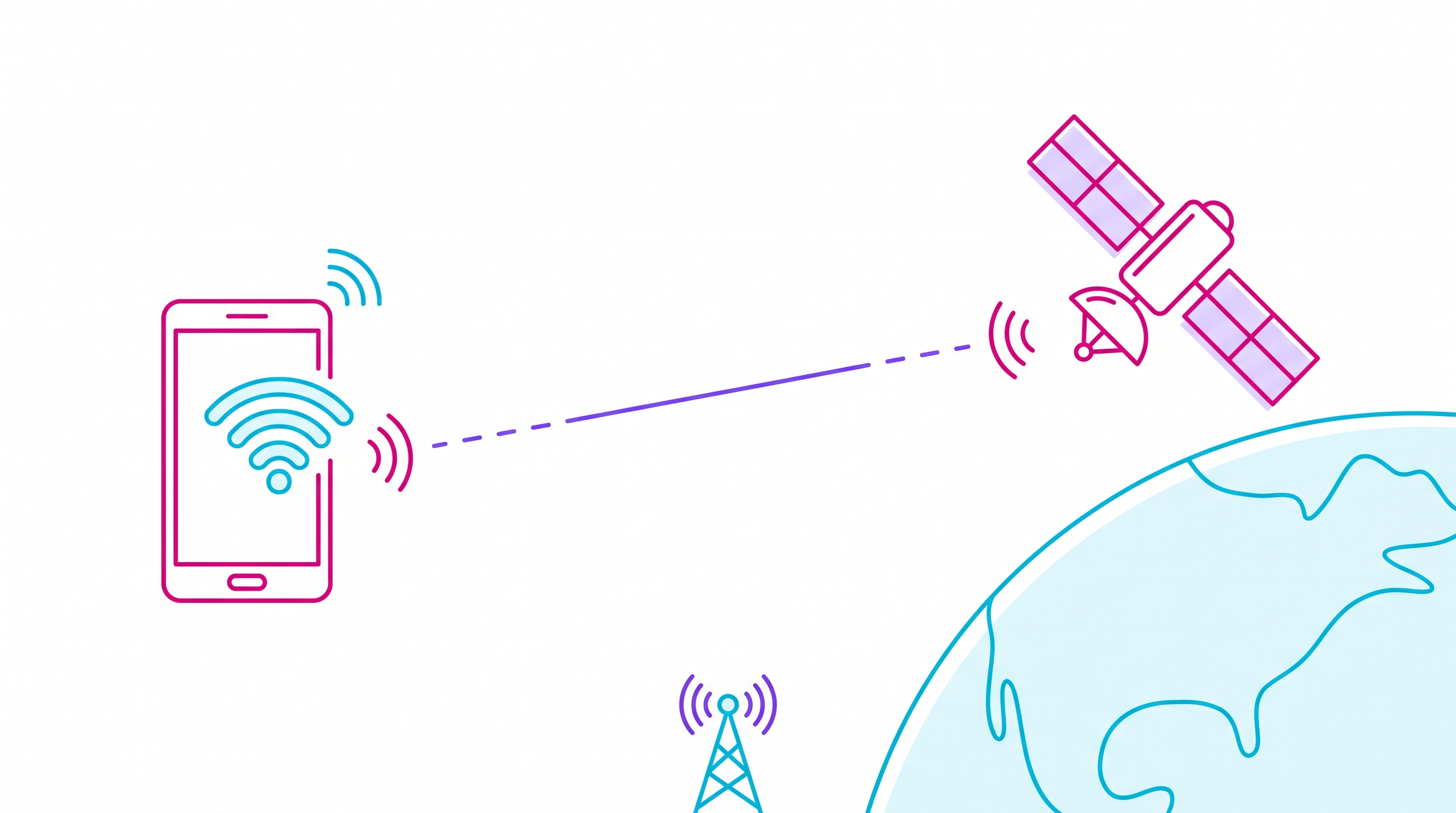
On August 9, 2026, the US Federal Communications Commission voted to open a formal rulemaking proceeding that could let unlicensed devices talk directly to satellites. The headline number: 200 megahertz of spectrum, spread across three bands that almost every device you own already uses.
What the FCC actually did
The Commission adopted a Notice of Proposed Rulemaking (NPRM) — the first formal step toward new rules, not the rules themselves. It identifies three bands as candidates for direct-to-device satellite links from unlicensed equipment:
- 902–928 MHz — the band behind LoRa, Zigbee and a lot of smart-home gear in the Americas
- 2400–2483.5 MHz — Wi-Fi 2.4 GHz and Bluetooth
- 5725–5850 MHz — the upper slice of 5 GHz Wi-Fi
These three were picked for a practical reason: they already permit unlicensed transmission at relatively high power levels, and reaching a satellite in low Earth orbit needs power. A Bluetooth radio designed to cross a living room is not, on its own, going to close a link 500 kilometers up — but the regulatory ceiling in these bands is high enough that purpose-built hardware could.
This is separate from the FCC's existing Supplemental Coverage from Space (SCS) framework, which lets satellites operate in spectrum licensed to terrestrial carriers. Under SCS the Commission has already granted AST SpaceMobile commercial authorization for a 248-satellite constellation using low-band 700 and 800 MHz spectrum, coordinated with Verizon, AT&T and FirstNet. SCS is carrier-mediated: your phone connects to a satellite because your operator arranged it. The new proceeding is the opposite idea — connectivity that does not depend on a carrier relationship at all.
Why this matters if you travel
Right now, satellite messaging on consumer phones is carrier-gated and geographically patchy. Whether emergency SOS or satellite texting works when you land somewhere depends on your operator, your device model, and bilateral deals you have no visibility into. Travelers routinely discover the hard way that a feature advertised at home simply is not available abroad.
An unlicensed pathway would loosen that. If a device can reach a satellite using the same bands it already ships with, the connection stops being a function of who sold you your plan. Think trackers that keep reporting from the middle of the Atacama, a travel router that can push a location ping from a mountain pass, or an emergency beacon in your bag that does not care which country you are standing in.
Two caveats worth being blunt about. First, timeline: an NPRM opens a comment period, and the interested parties are not shy. SpaceX has already asked the Commission to change elements of its satellite-to-device plan, and incumbent unlicensed users — Wi-Fi, LoRa, RFID — will argue hard about interference. Rules in 2027 would be fast. Second, capacity: nobody is proposing you stream video to orbit over Wi-Fi spectrum. Realistic near-term use is short messages, telemetry and location, not a data plan.
What this changes for your next trip: nothing, yet
Satellite direct-to-device is genuinely advancing — Samsung and Keysight demonstrated satellite-to-satellite handover with a standard 5G phone at CES 2026 using the 3GPP Release 19 n252 band, and Iridium's standards-based NTN Direct service is slated to go live this year. But every one of those is aimed at low-bandwidth messaging and IoT, not at replacing mobile data.
For the next several years, the thing that actually gets you working internet the moment you land is still a travel eSIM. A profile you install before departure connects to a local network at local wholesale rates, typically 60–80% below what a carrier day pass costs, and it works the second you switch off airplane mode. Providers like HOLASIM, Airalo and Saily are all selling essentially that.
The useful way to hold both ideas at once: satellite is becoming the floor, not the ceiling. It is the layer that guarantees you can send "I'm safe" from anywhere. The eSIM is still the layer that lets you use maps, translation, boarding passes and video calls. Rules like the one the FCC just proposed are what eventually make the floor universal — and that is worth watching even though it will not change your packing list this year.
If you want the fuller picture on where satellite-to-phone stands today, we covered the current state of satellite 5G and AST SpaceMobile's latest launch.