American Airlines Free Wi-Fi Nears Full Fleet in 2026: Where the Free Connection Still Ends
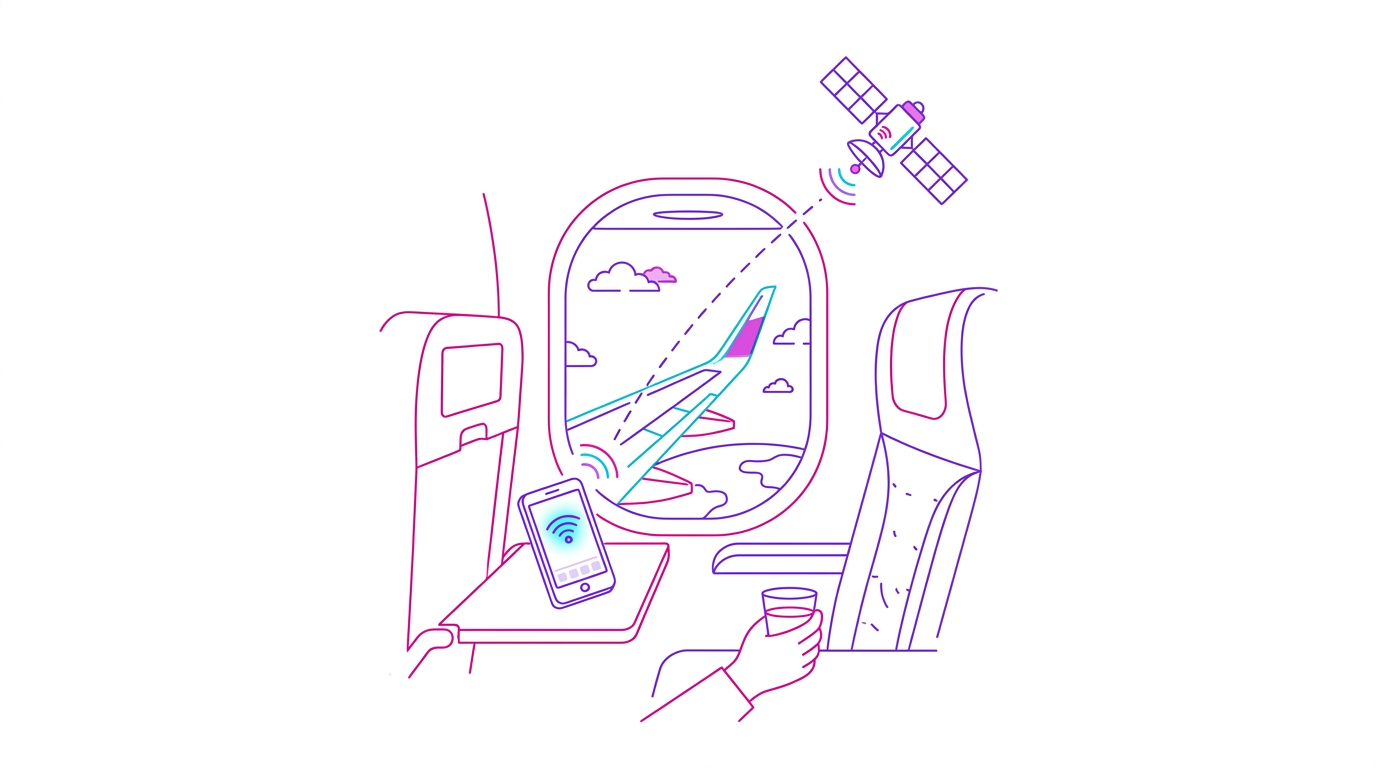
American Airlines has spent 2026 rolling out free, high-speed Wi-Fi across its fleet, sponsored by AT&T and powered largely by Viasat and Intelsat satellite connectivity. The airline says the free service is now live on aircraft covering roughly 90% of its fleet, including 100% of its narrowbody and dual-class regional aircraft, with AAdvantage membership (free to join) the only requirement — no AT&T subscription needed.
The move puts American in step with Delta, United and JetBlue, which had already dropped Wi-Fi fees on most routes, and with United's continuing rollout of SpaceX's Starlink to more than 300 aircraft. For travelers, the practical effect is straightforward: on most American Airlines flights in 2026, checking email, messaging apps, and browsing no longer costs anything extra, where it used to run $8 to $25+ per flight depending on route and duration.
Where the free Wi-Fi does not reach yet
The gap sits in American's long-haul widebody fleet. Older Boeing 777-200ER and 777-300ER aircraft, along with some 787-8 and 787-9 units, are not included in the initial free rollout because they still run legacy connectivity hardware. American says newer 787-9s already ship with the upgraded, free-eligible system, and a phased retrofit of the rest of the widebody fleet is expected to close most of the remaining gap by early 2027.
That detail matters more than it looks: those older widebodies fly exactly the long-haul international routes — Europe, South America, Asia — where a traveler is most likely to need a data connection the moment the wheels touch down, not just mid-flight.
Free Wi-Fi at 35,000 feet still is not roaming on the ground
Speed matters too. Airlines flying with newer LEO systems like Starlink post median download speeds above 100 Mbps with latency under 50ms, compared with 15 to 35 Mbps and 500 to 800ms on older geostationary satellite links — a gap wide enough to decide whether a video call actually holds up at cruising altitude.
But even a perfect in-flight connection solves only part of the trip. The moment the aircraft door opens, in-flight Wi-Fi ends, and every traveler is back to the same three options travelers have had for years: pay for airport Wi-Fi (often slow, ad-gated or time-limited), roam on their home carrier (frequently $10 to $15 a day or more), or rely on a data connection they set up before departure.
This is exactly the gap a travel eSIM is built to close. Installing an eSIM — from a provider like HolaSIM — before boarding means the data connection activates automatically on arrival, without hunting for airport Wi-Fi passwords or waiting for a roaming pass to kick in. For a long-haul flight on one of the widebody aircraft still outside American's free Wi-Fi rollout, that gap between "Wi-Fi off" and "local data on" is precisely where a pre-installed eSIM earns its cost.
Practical takeaway for the 2026 traveler
None of this requires new hardware. Every iPhone since the XS and the vast majority of Android flagships from the last five years already support eSIM, so the fix is a five-minute setup, not a phone upgrade. Before your next trip: check whether your route runs on one of American's Wi-Fi-equipped aircraft (the seat-back app or booking confirmation usually flags it), and install your destination eSIM before departure so you are not depending on the plane's connection — or the airport's — to get online.
For a deeper look at how much a travel eSIM saves compared with carrier roaming on a typical international trip, see our eSIM vs Roaming in 2026 breakdown.