Wi-Fi 8 Arrives at IFA 2026 — and It Will Not Fix Hotel or Airport Wi-Fi Any Time Soon
The first Wi-Fi 8 hardware lands at IFA Berlin this week, built around reliability rather than speed. Here is why the gains will reach your home years before they reach a hotel lobby.
IFA Berlin runs from 4 to 8 September 2026, and the headline connectivity story this year is the arrival of the first consumer Wi-Fi 8 hardware. TP-Link has unveiled the Archer 8 Ultra tri-band router and the Deco 8 Ultra mesh system, both built on the upcoming IEEE 802.11bn standard. The Deco 8 Ultra is quoted at up to 22 Gbps of wireless throughput and 10 Gbps wired, with a three-pack rated for roughly 9,800 square feet and more than 200 connected devices. The company's Archer 8 platform is scheduled to reach shelves in October 2026.
The show's broader Communication & Connectivity area covers phones, accessories and mobile devices, with Xiaomi exhibiting at IFA for the first time in the fair's history.
Wi-Fi 8 is not about speed
This is the part worth understanding, because it breaks with every previous generation. Wi-Fi 4 through Wi-Fi 7 were sold on peak throughput. Wi-Fi 8's own working name is Ultra High Reliability (UHR), and the headline figures are about consistency rather than raw numbers:
- Roughly 25% better performance in poor signal conditions
- Roughly 25% lower latency
- Roughly 25% fewer dropouts when moving between access points
In other words, the standard is designed for exactly the failure modes people actually notice: the video call that stutters when you walk to the other end of the building, the connection that clings to a distant access point instead of handing off cleanly, the network that collapses when a few hundred devices show up at once.
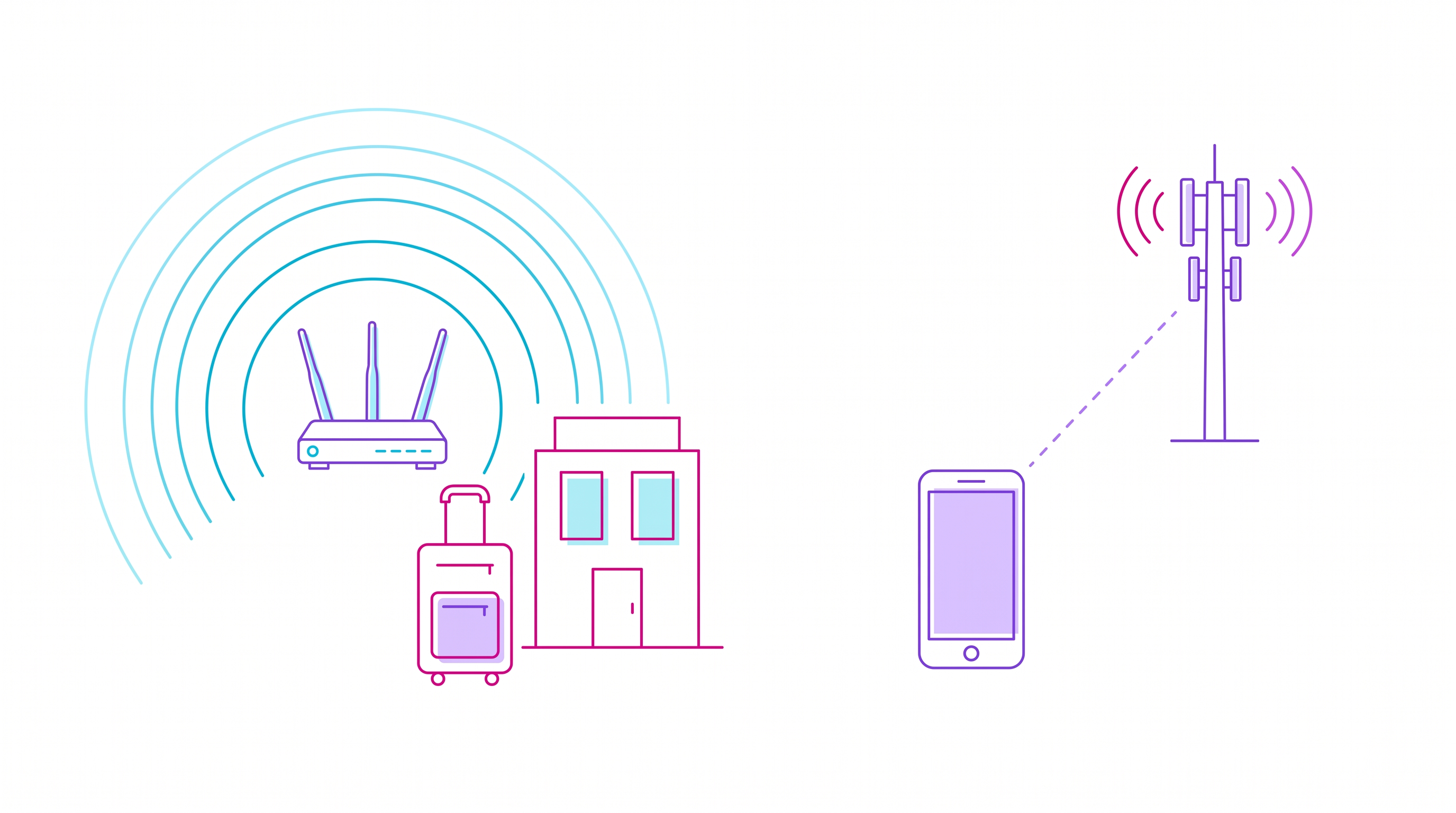
If that sounds like a description of a hotel or an airport, that is not a coincidence. Dense, high-churn environments with hundreds of simultaneous clients are precisely what UHR is engineered for.
Why travelers will wait years to feel it
Here is the catch, and it is a big one. The IEEE 802.11bn standard is not projected to be finalised until May 2028. Wi-Fi Alliance certification is expected to launch in late 2027. The routers shipping this autumn are pre-standard implementations of a draft specification.
Now consider how public Wi-Fi actually gets replaced. A hotel chain's access points are a capital expense with a refresh cycle typically measured in five to seven years, and they get swapped during a property renovation, not because a new standard appeared at a trade show. Airport Wi-Fi runs on infrastructure contracts that are tendered years in advance. Even venues that upgrade aggressively are still deploying Wi-Fi 6 and Wi-Fi 6E gear today, one and two generations behind what is being demonstrated in Berlin.
The realistic sequence is: enthusiasts buy Wi-Fi 8 routers for their homes in late 2026 and 2027; phones and laptops gain Wi-Fi 8 radios through 2027 and 2028; and the average hotel lobby, airport gate or café gets there somewhere in the 2030s. Your home network will feel the difference long before any place you check into.
There is also a limit no standard can lift. Better Wi-Fi does nothing about a slow or oversubscribed internet connection behind it, and most of the frustration with hotel Wi-Fi is backhaul, not radio.
What this means for your next trip
The practical takeaway is unchanged and now better evidenced: do not plan a trip around public Wi-Fi. It is the layer of your connectivity you control least — you cannot choose the hardware, the backhaul, the captive portal or how many other guests are streaming at the same time.
Cellular data is the layer you can control, and it is the one that has actually improved for travelers over the past two years. A travel eSIM gives you a local or regional data plan at local pricing, installed before you leave, working the moment you land — no lobby password, no captive portal, no waiting to find out whether the Wi-Fi in your accommodation is any good. Providers such as HOLASIM deliver the profile by QR code or activation link, so setup happens at home on your own connection.
A few habits that hold up regardless of what standard the venue runs:
- Install your travel data plan before departure, over your home Wi-Fi. This also removes the awkward dependency where you need airport Wi-Fi to download the thing that replaces airport Wi-Fi.
- Use your phone's hotspot for your laptop rather than the hotel network. It is usually faster, always more private, and the comparison of what you actually pay still favours an eSIM over carrier roaming by a wide margin.
- Treat public Wi-Fi as a bonus, not a plan. If it works, use it for large downloads. If it does not, nothing about your trip breaks.
- Assume in-flight and in-transit connectivity is separate. Satellite Wi-Fi on aircraft has improved fast, as we covered in Free Starlink Wi-Fi Now Flies on 1,400+ Planes, but it is a different system with different limits from anything on the ground.
Wi-Fi 8 is a genuinely sensible generation — the first one to optimise for reliability instead of a bigger number on the box. It just will not be the thing that fixes your next hotel check-in.