The Travel eSIM You Did Not Buy: Airlines, Credit Cards and Hotels Are Bundling Data in 2026
Airlines are folding data into premium cabins and loyalty tiers, card issuers are adding connectivity as a travel perk, and hotel groups are handing eSIMs to international guests. The distribution war has started.
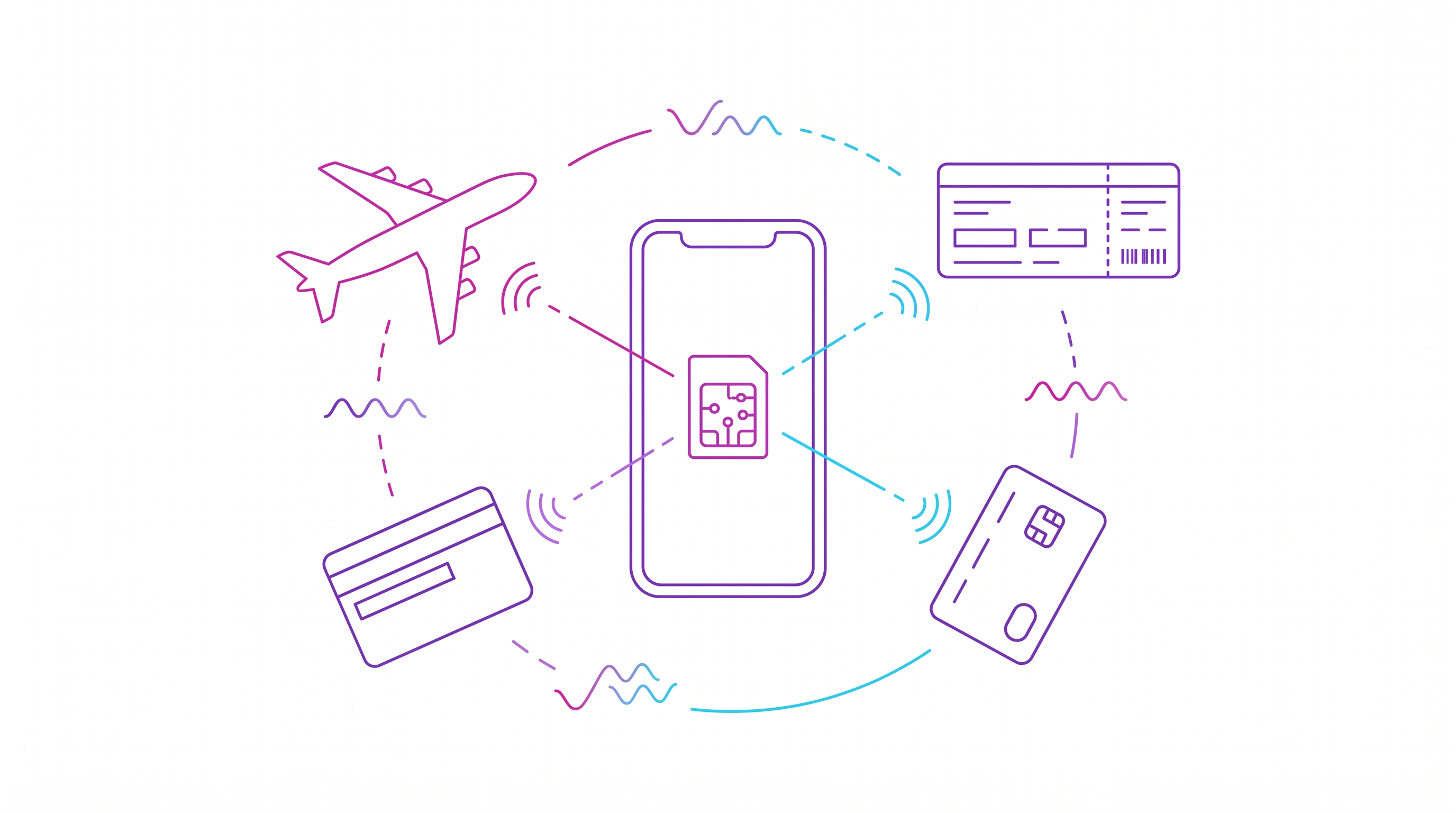
For the last few years, buying a travel eSIM meant going to an app, picking a country and paying. In 2026 that is quietly changing: increasingly, the eSIM finds you. Airlines, card issuers, hotel groups and booking platforms are folding travel data into products you already paid for — and a lot of travelers are buying a plan they technically already own.
What is actually happening
Industry coverage this month is converging on the same conclusion: in travel eSIM, the winners will be whoever owns distribution, not whoever posts the lowest per-gigabyte price. The pattern showing up across the sector looks like this:
- Airlines are bundling a data allowance into premium cabins and top loyalty tiers, positioning travel eSIM as the missing link between in-flight Wi-Fi and connectivity on the ground. One widely cited projection has travel eSIM becoming a standard airline offering by 2028 — as routine as a mobile boarding pass or online check-in.
- Card issuers are adding travel connectivity as a perk on travel credit cards, in the same bracket as lounge access or trip insurance.
- Hotel groups are offering eSIMs through loyalty programs for international guests.
- Booking platforms are attaching it at checkout. Orange Travel signed a distribution deal with Trip.com in June 2026 covering France, Italy, Spain, the UK and Switzerland.
- Carriers themselves are shipping travel-specific products rather than defending legacy roaming. Verizon's Visible brand launched an eSIM Travel Pass around the 2026 World Cup at $25 for 7 days, $35 for 14 days and $45 for 30 days.
Meanwhile the airport SIM kiosk — for decades the default fallback on arrival — is converting. Retailers that once sold only plastic SIMs are adding app onboarding and QR-based digital products, because the customer increasingly arrives already connected.
Why the bundling is happening now
Two things made this inevitable. First, the hardware finally caught up: global eSIM smartphone penetration was around 5% at the end of 2025 and is expected to hit roughly 10% by the end of 2026, doubling again in 2027. Second, adoption exploded — travel eSIM users are estimated at about 134 million in 2026, up from 101.8 million in 2025.
Once a product reaches that scale, the economics of selling it change. Acquiring a customer one app download at a time is expensive. Attaching the same eSIM to a flight booking, a card statement or a hotel reservation costs the provider almost nothing and reaches someone who is, by definition, about to travel. For more on the volume shift behind this, see our piece on travel eSIMs passing 134 million users.
There is a catch, and it is the same one that plagues every bundled perk: you have to know you have it, and you have to be able to use it. A data allowance buried in tier benefits three screens deep in an airline app is not connectivity — it is a marketing line. That is exactly why the loudest argument in the sector this month, made by travel eSIM operator Jetpac among others, is that the next competitive battle is not price but foolproof reliability: does the profile install before departure, does it attach to a decent network on landing, and does support respond when it does not.
What to check before your next trip
Before you buy a plan for your next destination, spend five minutes on this:
- Check your airline's loyalty tier benefits. Look specifically for "data", "connectivity" or "eSIM" — bundled allowances are often listed separately from Wi-Fi vouchers.
- Read your travel card's benefits guide. Connectivity perks are new enough that they are frequently added without much fanfare.
- Check the hotel loyalty program if you are staying at an international chain property.
- Compare what is bundled against what you would buy. A free 1 GB allowance for a two-week trip is a nice extra, not a plan. Know the size before you rely on it.
- Verify the coverage countries. Bundled eSIMs are often single-country or single-region, which is fine until your itinerary has a connection or a second stop.
- Install it before you fly, on home Wi-Fi, and confirm the profile appears in your settings.
If the bundled allowance does not cover your trip — which is common — a dedicated provider is still the better base layer. Services like HOLASIM are built around the profile working from the moment you land, which is the part bundled perks most often get wrong. And if you are still weighing this against your carrier's roaming pass, the numbers are in our eSIM vs roaming breakdown.
The bigger picture
Bundling is usually a sign a category has stopped being a novelty. Nobody bundles something travelers do not expect. The interesting question for the next 18 months is not whether airlines and banks will give away travel data — several already do — but whether the version they hand you is good enough that you stop shopping. Right now, for most itineraries, it is not. It is worth checking anyway.