T-Satellite Is Now Open to AT&T and Verizon Customers — And Travelers Should Read the Fine Print
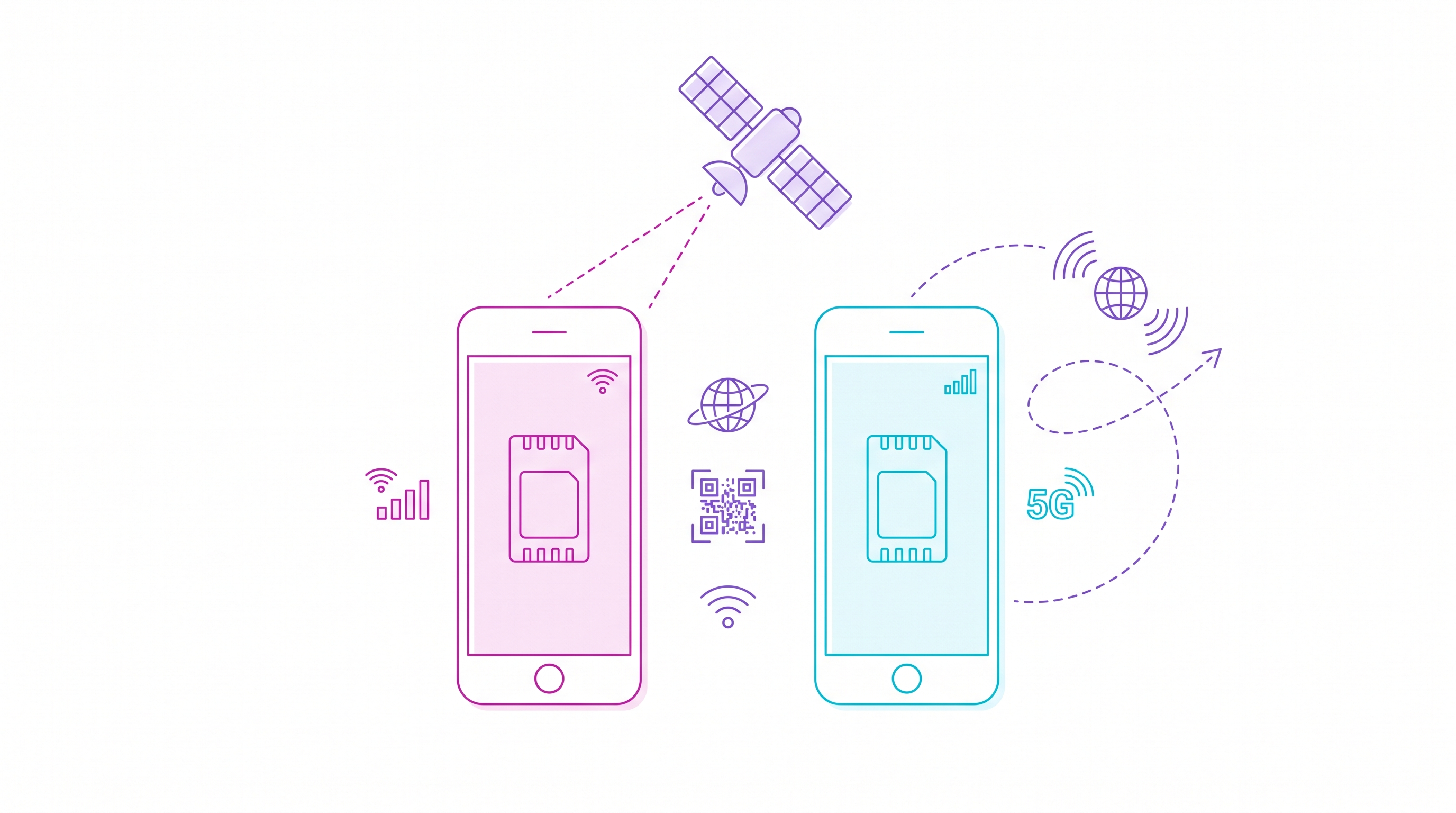
T-Mobile has opened T-Satellite to customers of every US carrier, meaning an AT&T or Verizon subscriber can now buy Starlink-powered satellite connectivity for $10 a month without switching networks. It is the first time direct-to-device satellite has been sold as a standalone add-on rather than a reason to port your number — and for travelers, it is both more useful and more limited than the headlines suggest.
What changed
T-Satellite launched as a T-Mobile perk: included on the top Experience Beyond and Go5G Next plans, a paid add-on for everyone else on the network. The service now accepts subscribers regardless of who bills their phone. It runs over SpaceX's Starlink direct-to-cell constellation and covers the United States, filling in the dead zones where no terrestrial tower reaches.
The feature set has also grown past emergency texting. T-Satellite now carries app data, not just SMS and location sharing — WhatsApp, Google Maps, AccuWeather, AllTrails and X among them. More than 60 phone models work with it, including iPhone 13 and newer, Galaxy S21 and up, and Pixel 9, provided the handset is running current software such as iOS 26 or Android 16. Voice is in testing through 2026 with a broader rollout expected in 2027, and anything resembling normal cellular speed waits on the Starlink V2 generation targeted for the second half of 2027.
Why this matters beyond the US
The interesting part is not the coverage. It is the business model. Until now, direct-to-device satellite was a retention weapon: a feature bundled into a premium plan to make leaving your carrier feel expensive. Selling it to rival carriers' customers at a flat $10 turns it into a utility — priced per month, bought on demand, indifferent to who owns the SIM.
That is the same shift travel eSIMs forced on international data. Roaming used to be something your home carrier granted you; now it is a commodity you buy for the trip. Satellite connectivity is starting down that path, and once a capability is sold as an add-on rather than a plan tier, the pressure to make it work across borders and across providers becomes hard to resist.
The fine print travelers keep missing
Satellite is a coverage tool, not a roaming tool. T-Satellite fills gaps where there is no tower — a canyon, a forest service road, open water off the US coast. It does not give you data in Lisbon, Bangkok or Buenos Aires. If your plan has no international allowance, satellite does not create one.
It is thin, not fast. Messaging and low-bandwidth apps, on a good link. It is not a substitute for mobile data, and it will not stream, upload photos or run a video call. Treat it as a lifeline layer.
Your phone has to be recent and current. The 60-plus supported models all need up-to-date firmware. Older handsets that otherwise work fine abroad simply will not connect.
The stack for an international trip is unchanged. A travel eSIM for data at your destination, a satellite add-on for the parts of the trip with no coverage at all, and your home line kept alive for SMS codes from your bank. Those are three different jobs, and none of them substitutes for another. Our breakdown of data-only eSIMs vs. plans with a number covers how to keep the last one working.
What to actually do
If your travel involves US backcountry, boating, or long drives through empty geography, $10 a month is a reasonable insurance policy and it no longer requires leaving your carrier. If your travel is international, this news changes nothing about your data plan: you still need coverage at the destination, and a travel eSIM from HOLASIM or another travel-focused provider remains the cheaper answer versus a carrier day pass. For the wider picture on where satellite fits, see satellite 5G and NTN in 2026.
The honest summary: satellite just became easier to buy and slightly more capable. It did not become a replacement for a local data plan, and marketing over the next year will work hard to blur that line.