Satellite 5G Is Here: Your Phone Now Connects Where Roaming Never Worked
From Starlink voice calls to Europe's first 5G NTN satellite transmission, July 2026 marked a turning point: standard phones now connect via satellite.
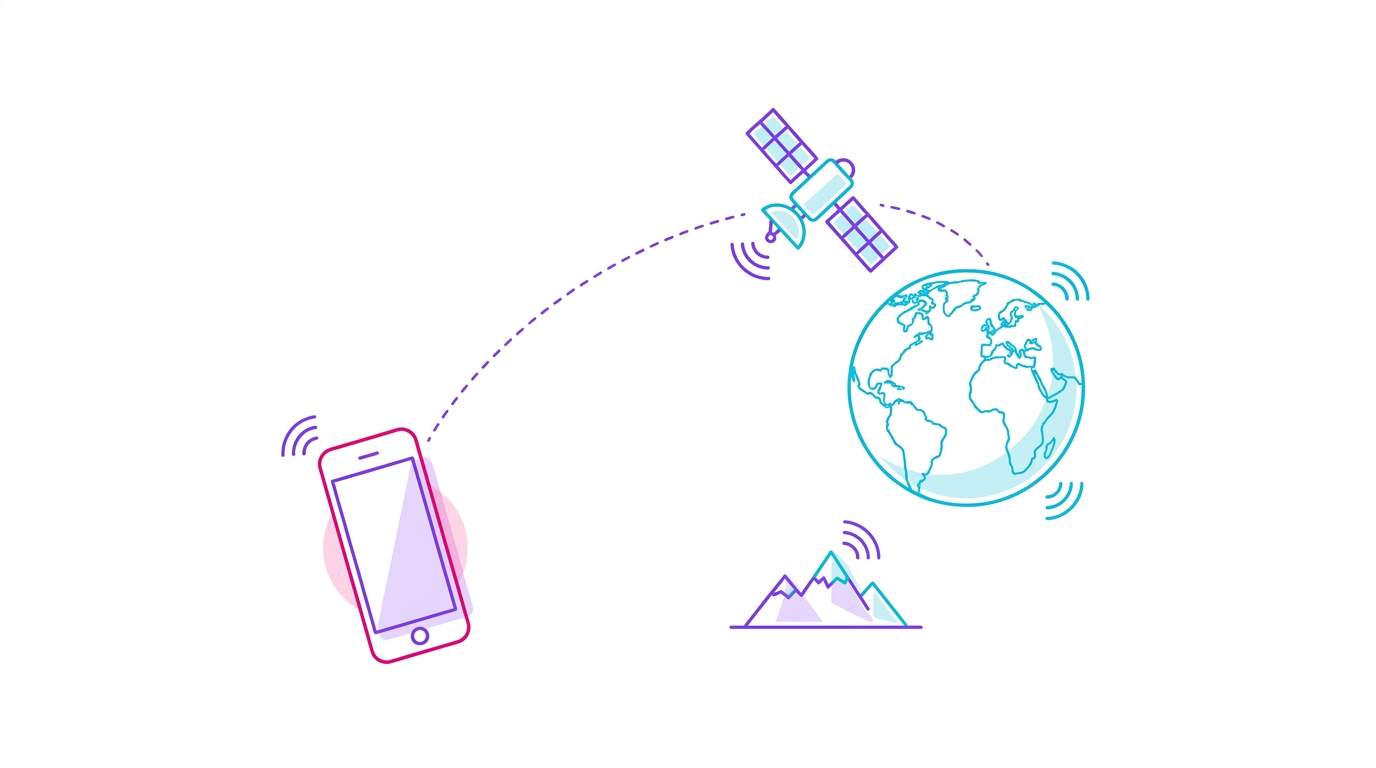
Satellite connectivity for ordinary smartphones stopped being a demo and became a product in 2026 — and July brought two milestones that confirm it.
What just happened
On July 8, 2026, the European Trantor consortium completed the first 5G NTN (Non-Terrestrial Network) transmission over a Hispasat satellite, proving that standards-based satellite connectivity — not proprietary tech — works over commercial geostationary satellites. Days later, on July 16, Viasat demonstrated the first satellite voice call fully integrated into a BMW vehicle platform.
This builds on a fast-moving year. SpaceX's Starlink Direct to Cell, launched commercially with T-Mobile voice calling in February 2026, is already the most scaled direct-to-device deployment in the world. And after Iridium and Qualcomm expanded Snapdragon Satellite, more than 30 Android models from Samsung, Motorola and OPPO shipped with satellite messaging support in early 2026.
Why NTN matters more than proprietary satellite features
Apple's Emergency SOS proved the concept, but it was a closed system. 3GPP Release 17 changed the game: NTN is now part of the same global standard that governs 4G and 5G. That means any compliant phone can, in principle, connect to any compliant satellite network — the same interoperability that made international roaming possible in the first place.
For travelers, the practical translation is simple: dead zones are shrinking. Hiking in Patagonia, sailing between Greek islands, crossing the Australian outback — places where no terrestrial network exists are becoming reachable for messaging first, voice next, and eventually data.
What satellite does NOT replace (yet)
Satellite links today handle messaging and basic voice. Bandwidth-heavy usage — maps, photos, video calls, social media — still needs a terrestrial network. That is why the winning travel setup in 2026 combines both layers:
- A travel eSIM as your primary data layer. Providers like HOLASIM cover the 99% of your trip that happens within mobile coverage, at a fraction of roaming prices.
- Satellite as your safety layer. If your phone supports NTN or Starlink Direct to Cell, activate it before leaving — it costs nothing to have it ready.
- Know your phone's capabilities. Check whether your model is among the 30+ satellite-ready devices before assuming you are covered.
The bottom line
The connectivity stack for travelers is being rebuilt in layers: terrestrial 5G through travel eSIMs for everyday data, and satellite NTN as the universal fallback. Carriers losing roaming revenue — projected at up to $11 billion — now face pressure from two directions at once.
To understand which features matter when picking a plan, see eSIM features that matter in 2026: hotspot, eKYC, 5G.