Airtel Launches Starlink Direct-to-Cell in Uganda: What It Means for Travelers
Airtel Uganda just switched on Starlink Direct-to-Cell satellite texting, the second such launch in Africa. Here's what it means for travelers and how it pairs with eSIM data.
Airtel Launches Starlink Direct-to-Cell in Uganda: What It Means for Travelers
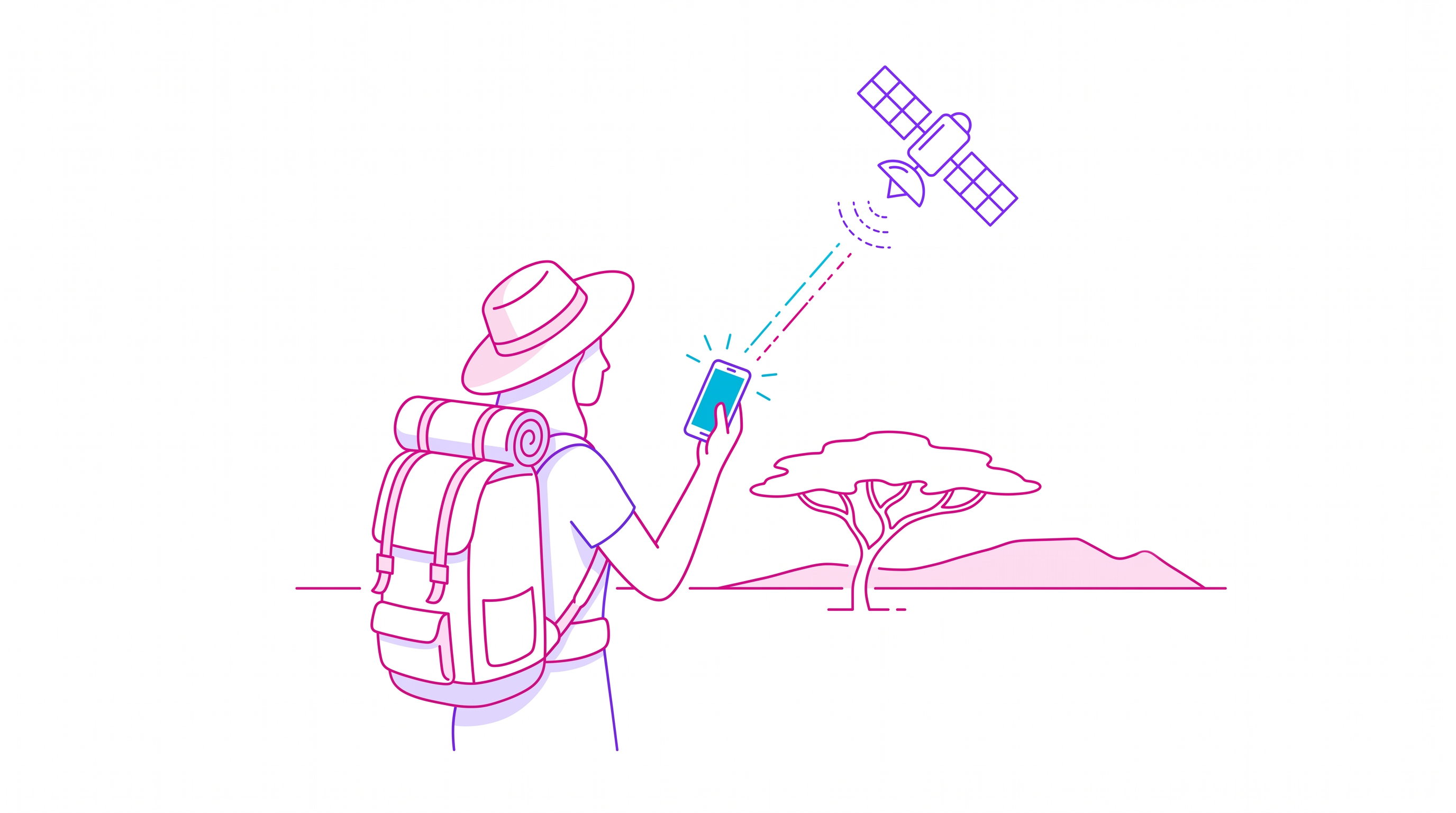
On September 25, 2026, Airtel Uganda flipped the switch on Starlink Direct-to-Cell service, making Uganda the second African market — after the Democratic Republic of Congo — to offer satellite-to-phone connectivity without any special hardware. For now, the service is limited to SMS and WhatsApp messaging, letting a standard, unmodified smartphone send and receive texts the moment it drifts outside Airtel's terrestrial tower coverage — no satellite phone, no bulky antenna, no separate SIM.
What actually changed
Direct-to-Cell works by having a constellation of low-earth-orbit Starlink satellites act as a cell tower in the sky, beaming signal straight to ordinary 4G/5G-capable phones. Airtel's rollout follows the same pattern SpaceX has used in test markets in the Americas and the Pacific: messaging first, data and voice later. Practically, that means a traveler with an eSIM active on Airtel's network can now expect basic texting to keep working in the vast stretches of rural Uganda — national parks, lake regions, border crossings — where terrestrial towers have never reached and likely never will, given the cost of building infrastructure in low-density areas.
Why it matters for travelers, not just locals
Uganda draws a steady stream of travelers heading to gorilla trekking in Bwindi, safaris in Murchison Falls, or overland routes toward Rwanda and Kenya — precisely the kind of remote itineraries where a phone going dark for days has historically been the norm. Airtel's move doesn't fix that entirely (data still requires terrestrial coverage or a separate satellite plan), but it closes the most dangerous gap: the ability to send an emergency text or confirm you're safe when nothing else works. Similar rollouts from T-Satellite in the US and NTT Docomo with Starlink in Japan point to the same trend accelerating worldwide — 2026 is the year "no signal" stops meaning "no way to reach anyone."
The numbers behind the shift
The GSMA and satellite-industry trackers estimate direct-to-device connectivity could cover several hundred million previously unreachable square kilometers globally by the end of the decade, with Sub-Saharan Africa identified as one of the regions with the widest terrestrial coverage gaps — and therefore the most to gain. Airtel operates in 14 African markets; if Uganda's launch performs as expected, industry watchers expect Kenya, Tanzania, and Nigeria to be strong candidates for the next wave.
Airtel's Uganda launch also puts competitive pressure on MTN Uganda, the country's dominant operator, which now faces a rival offering a satellite failsafe most of its subscribers can't get. Regionally, this mirrors a broader contest between Starlink-linked telcos and Amazon's competing Kuiper-based direct-to-device ambitions, both racing to sign exclusivity or first-mover deals with African carriers before 2027, when analysts expect data-capable direct-to-cell service to arrive and the stakes to rise substantially.
What this means for your eSIM strategy
Satellite messaging is a safety net, not a data plan. If you're traveling to Uganda or similar East African destinations, the practical setup for 2026 still looks like this: an eSIM with a solid Uganda or regional Africa data allowance for maps, translation, and messaging apps in cities and along main routes, plus the knowledge that basic SMS will now increasingly work even where your data connection drops. HolaSIM's Africa eSIM plans are built for exactly this kind of trip — instant activation before you land, no physical SIM swap at a counter in Entebbe, and coverage that spans multiple East African countries if your route crosses borders.
The bigger picture: connectivity for travelers is converging from two directions at once. Terrestrial eSIM data keeps getting cheaper and easier to activate, while satellite direct-to-cell is quietly filling in the blackout zones that data plans can't reach. Neither replaces the other yet — but together, they're making "completely offline" an increasingly rare experience, even in Uganda's most remote corners.
For more on staying connected on East African routes where towers are scarce, see our guide to the best eSIM for Africa in 2026.