Korean Air and Asiana Switched On Free Starlink Wi-Fi in 2026 - Here Is Where the Free Connection Ends
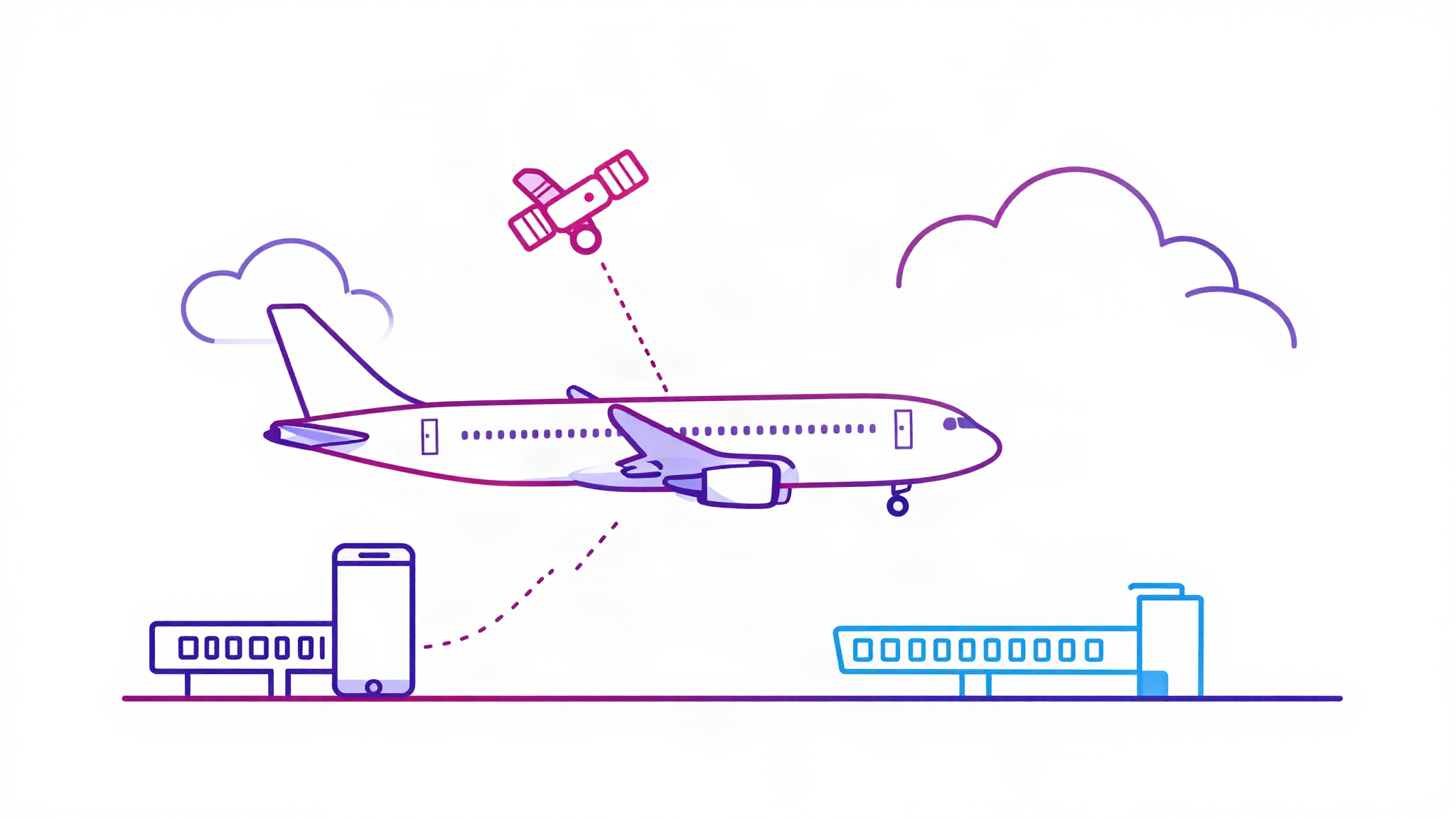
Korean Air switched on Starlink Wi-Fi for the first time on September 15, 2026 - and it did it the way passengers have been asking airlines to do it for a decade: free, for every cabin class, gate to gate.
What actually launched
Korean Air began with four widebodies: three Airbus A350-900s and one Boeing 777-300ER. Those aircraft fly medium- and long-haul routes to the Americas, Europe and Southeast Asia, plus a handful of key short-haul rotations, so the first passengers to notice the change are the ones on the longest sectors.
Asiana Airlines, now folded into the Korean Air group, went live the same day with a bigger day-one fleet: nine A350-900s and one A330-300 that finished their communications equipment installation this month. The group plans to have every Korean Air and ex-Asiana aircraft equipped by the end of 2027, with Jin Air, Air Busan and Air Seoul to follow. The Asiana brand itself is scheduled to disappear in December 2026, so this is one of the last major product launches to carry the name.
Korea is not an isolated case. Lufthansa Group is rolling free Starlink across more than 850 aircraft, Emirates put its first Starlink-equipped A380 into service in late April 2026 and had 25 Boeing 777s flying with it in the same week, and Southwest began its own rollout over the summer. Free satellite Wi-Fi is quietly becoming the default expectation on a long-haul ticket rather than a premium extra.
Why this is a connectivity story, not an entertainment story
For years, in-flight Wi-Fi was priced and sold as a way to keep working. Low-earth-orbit satellite links change what it is: latency is low enough for messaging and calls over apps, and because the service is free, people actually turn it on. That means a passenger lands having already used their phone normally for twelve hours - and then walks into an airport where nothing works.
That is the gap worth naming. Free Wi-Fi in the air makes the disconnection on the ground feel worse, not better, because the break now happens at the jet bridge instead of at takeoff.
What the free connection does not cover
The moment the aircraft door opens, the Starlink link is gone. What you need next is terrestrial mobile data, and that is exactly where travelers still lose the most time and money:
- Immigration and arrival forms. A growing number of countries expect a digital arrival declaration or a QR code retrieved from an email, and airport Wi-Fi past passport control is inconsistent at best.
- The ride from the airport. Ride-hailing apps, station signage in an unfamiliar alphabet, and the hotel address you saved in a chat thread all need a live connection.
- Two-factor codes. If your home number is reachable only over the network you just left, the first bank or airline verification of the trip can lock you out.
The numbers behind the shift
Travelers are already solving this themselves. GSMA Intelligence put travel eSIM adoption at 28.1% for the 2026 summer season, up from 19.0% a year earlier - a jump of more than nine percentage points in a single year. Industry estimates put roughly 134 million travel eSIMs in use in 2026, about 32% more than the 101.8 million counted in 2025, now covering around 15% of all travel connectivity.
In other words: in-flight connectivity got solved by satellites, and ground connectivity got solved by the eSIM. The two are complementary, and neither one replaces the other.
How to land already connected
The practical version is short. Install a travel eSIM for your destination before you leave home, while you are still on a network you trust, and leave it switched off. Keep your home line active for calls and codes, and set the eSIM as your data line on arrival. Providers such as HolaSIM let you install the profile days in advance and start the plan only when you land, which is the whole point: the setup happens at home, not in an arrivals hall.
If you are flying Korean Air or Asiana on one of the equipped jets, you now have twelve free hours in the air to do it properly - download your offline maps, check that your eSIM profile is installed, and confirm which line is set for data. Landing connected is a five-minute task if you do it at 35,000 feet, and a frustrating hour if you do it at the taxi rank.
For a deeper look at how fast this shift is happening, see our report on travel eSIM adoption reaching 28.1% in summer 2026, and if speed on arrival matters to you, check which travel eSIMs actually deliver 5G abroad.