SGP.32 Stopped Being a Roadmap in 2026: The eSIM Standard Behind Your Next Travel Router
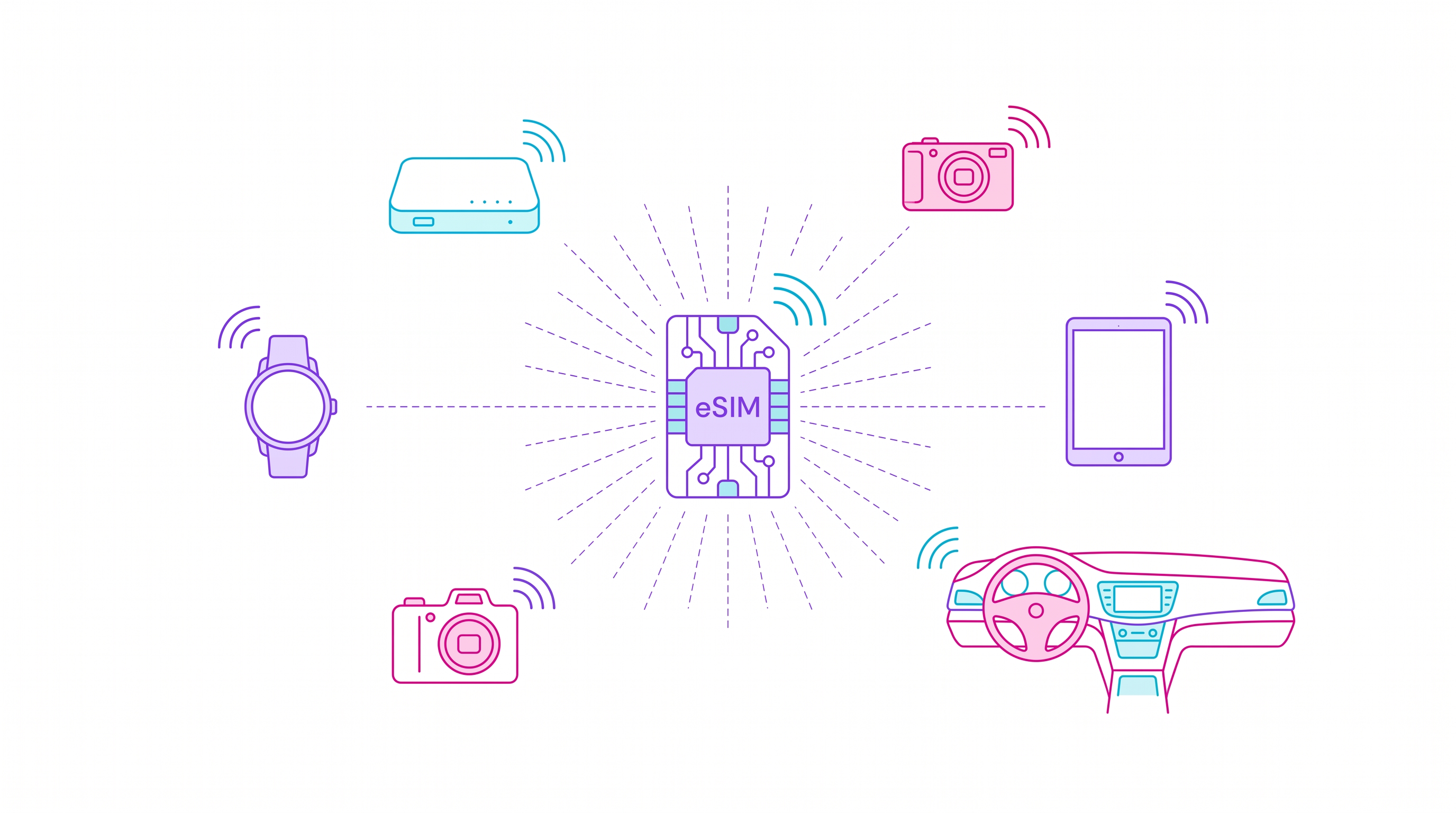
The most consequential eSIM news of 2026 is not about phones. It is about everything else you travel with.
SGP.32, the GSMA standard for remote SIM provisioning in devices without a touchscreen, spent years as a roadmap item. Over the first half of 2026 that changed decisively: certified hardware is now shipping, commercial SIM deliveries have begun, and the orchestration platforms that manage these profiles moved from slide decks to general availability. Version 1.3 of the specification was published on 28 May 2026, though v1.2 remains the certification baseline — so both will coexist for a while, and vendor pages you read this year may reference either.
What SGP.32 actually is
Your phone's eSIM runs on a different standard, SGP.22, which assumes there is a human in front of a screen who can open Settings, scan a QR code and tap "Add eSIM." That assumption breaks the moment the device has no screen.
SGP.32 removes the human. It introduces a lightweight architecture — including an eSIM IoT Remote Manager (eIM) and a discovery mechanism — that lets a fleet operator push, swap or retire connectivity profiles remotely, at scale, without anyone physically touching the hardware. The design targets constrained devices: NB-IoT and LTE-M modules, smart meters, industrial sensors, and anything built to run for years untouched.
The commercial signal is the clearest part. In 2026, SGP.32 compliance is increasingly being written into procurement RFPs, which means platforms have to be certifiably compliant rather than merely "compatible." That is the point at which a standard stops being optional.
Why a traveler should care about an IoT standard
Because the line between "IoT device" and "thing in your carry-on" has gone blurry.
The gadgets SGP.32 is designed for are already in travel bags and rental cars: pocket travel routers, cameras with cellular backup, GPS trackers slipped into checked luggage, connected car dashboards, smartwatches, e-readers, and the growing category of laptops and tablets that ship with eSIM built in. Nordic Semiconductor's nRF9151, shipped in August 2026, packs LTE-M, NB-IoT and satellite NB-NTN into a thumbnail-sized module — the kind of part that ends up inside a $60 tracker.
What SGP.32 changes for those devices is who chooses the network. Today, a travel router with a soldered-in profile is effectively locked to whatever deal its manufacturer struck. Under SGP.32, the profile can be reprovisioned over the air — so a device bought in one country can be moved onto a local or regional plan in another without opening it up, and without a QR code you would have no way to scan anyway.
There is a catch worth stating plainly: this is not a consumer self-service standard. SGP.32 hands control to the fleet operator or device maker, not to you. If you buy a connected camera or a car with an embedded profile, the ability to switch it to a cheaper plan belongs to whoever manages the eIM — unless the manufacturer chooses to expose that choice. Ask before you assume.
What this does and does not do for your phone
Nothing, directly. Your phone stays on SGP.22, which is why the familiar flow still works: buy a travel eSIM, scan a QR code or use the provider's app, and pick which line carries data.
That distinction matters when you are shopping. A travel eSIM sold for phones — from HOLASIM, Airalo, Saily or anyone else — is an SGP.22 consumer profile. A "device eSIM" for a router or tracker may or may not be one, and profiles are not interchangeable across the two standards. If you are buying data for a travel router specifically, confirm the provider supports your device class rather than assuming the phone plan will load.
The practical takeaway for 2026 and 2027
For now, the safest travel setup is still the boring one: a phone eSIM you install and test before you fly, plus a travel router with a slot or profile you have already verified works on the ground. We cover the device side in our guide to eSIM beyond the phone, and the phone-side shift in our tracker of eSIM-only handsets.
Where SGP.32 lands over the next two years is on the roaming bill you never see. When a rental car, a luggage tag and a rented hotspot can each be reprovisioned onto a local network the moment they cross a border, the permanent-roaming workarounds the industry has relied on start to look expensive. That is the change worth watching — and 2026 is the year it stopped being theoretical.