Your Bank Is Becoming a Phone Company: Revolut Mobile Plans and the eSIM Land Grab of 2026
eSIM is now Revolut's most-used non-banking product, and in June 2026 it started selling full mobile plans. Nubank, Klarna and LATAM are following. Here is what it means for travelers.
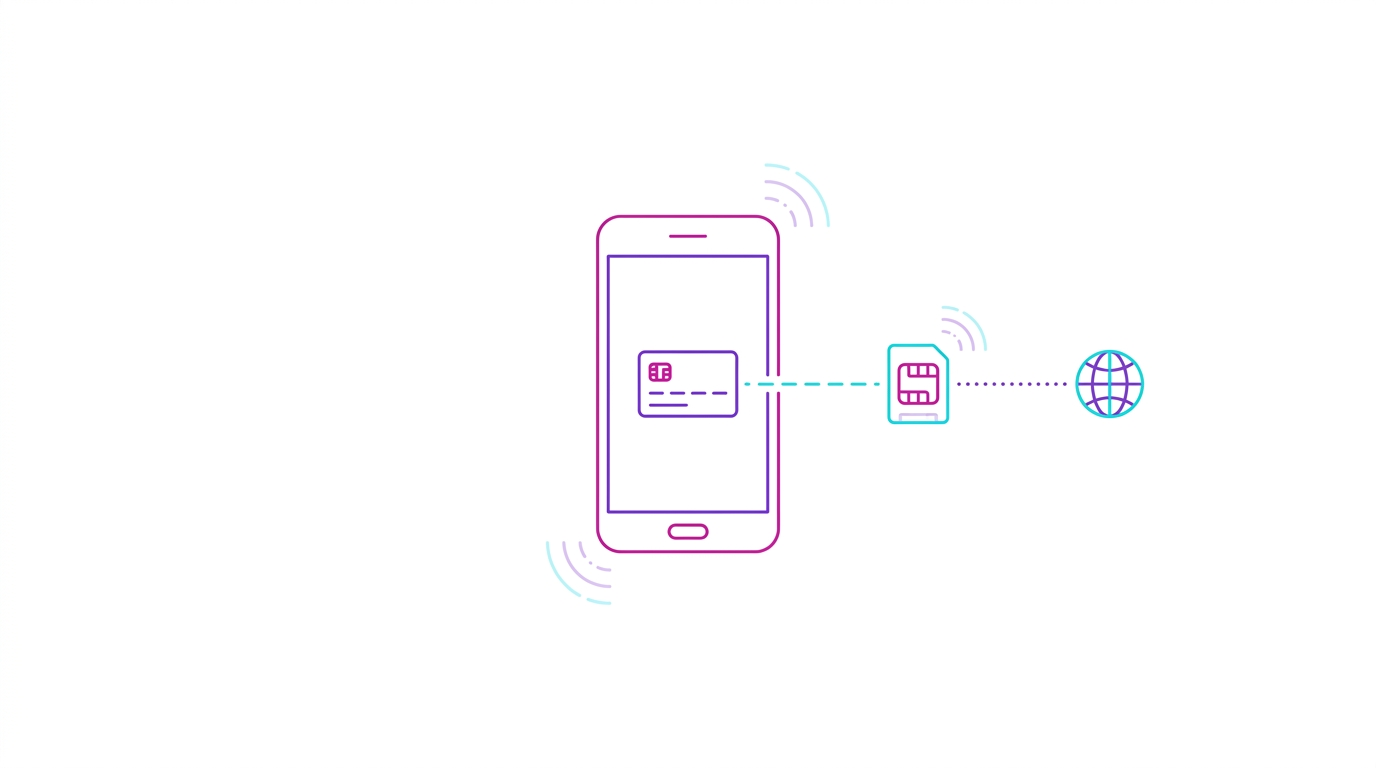
Something odd is happening at the intersection of fintech and telecom in 2026: the fastest-growing sellers of travel mobile data are not mobile operators. They are banks.
The clearest data point comes from Revolut. Since becoming one of the first UK financial institutions to offer global eSIMs to its customers in 2024, Revolut users have created millions of data plans used in more than 100 destinations. eSIM is now Revolut's number one non-banking product by usage — ahead of every other add-on the app sells.
And in 2026 the company escalated. Revolut announced Mobile Plans, a direct challenge to traditional network providers: monthly plans with unlimited calls, texts and data at home plus a 20GB roaming allowance across Europe and the US. From 8 June 2026, Revolut customers in the Netherlands can buy domestic mobile data plans inside the banking app, powered by connectivity provider 1GLOBAL.
That is no longer a travel perk. That is a bank operating as a mobile virtual network.
Why banks want to sell you data
The logic is unglamorous but sound. A bank already knows you are travelling — it can see the flight purchase and the currency exchange. It already has your payment credentials on file. And it has an app you open several times a day. Selling a data plan at the exact moment of intent, with zero checkout friction, is one of the highest-converting offers in consumer fintech.
Revolut also bundles a set monthly eSIM data volume into its premium Revolut Ultra tier, which turns connectivity into a retention lever rather than a one-off sale. ING has taken a similar route, folding eSIM allowances into banking subscription packages, and the pattern is spreading fast enough that eSIM is starting to look less like a telecom product and more like a lifestyle perk banks compete on.
It is not just Revolut
Embedded connectivity platforms have made this trivially easy to launch. Gigs, one of the main players, has live deployments across Revolut, Nubank, Klarna, NETGEAR and LATAM Airlines. 1GLOBAL markets what amounts to a white-label roaming service that any fintech can drop into its app.
The result is a 2026 landscape where the same underlying wholesale roaming capacity gets resold to you by a neobank in Brazil, a buy-now-pay-later app in Sweden, and an airline in Chile — each with its own branding, its own margin, and its own idea of what a fair price for a gigabyte is.
Juniper Research has been blunt about the consequence: travel eSIM usage is set to rise by roughly a third in 2026, and more network operators will be forced to launch their own travel eSIM offerings to defend a roaming business that used to be pure margin. When the bank in your pocket is undercutting your carrier's roaming rate, the carrier eventually has to answer.
What travelers should actually check
Convenience has a price, and with bank-issued eSIMs it is usually one of three things.
Coverage depth. A bank reselling one wholesale partner typically inherits that partner's network list — which can be narrower than a specialist provider that switches between multiple local carriers per country. Check the specific countries on your itinerary, not the headline "100+ destinations".
Price per gigabyte. Bundled allowances look generous until you compare them per GB. A 20GB regional allowance is excellent value if you use 20GB and mediocre if you use 3GB and paid a monthly subscription for the privilege.
Top-up behaviour abroad. This is the one that bites. If your allowance runs out mid-trip, can you top up inside the app without data? Some bank flows assume connectivity to sell you connectivity.
Specialist providers like HOLASIM compete on exactly those axes rather than on app convenience, which is why comparing a bundled bank allowance against a standalone travel plan is worth ten minutes before a long trip. Our breakdown of how much you really save with an eSIM versus roaming is a useful baseline, and it is instructive to compare bank pricing against what US carriers now charge tourists for their own travel eSIMs — the spread between the cheapest and most expensive route to the same network is still remarkably wide.
The bigger shift
For two decades, roaming was a captive market: your carrier owned the relationship and set the price. In 2026 the relationship is being unbundled by whoever happens to own the app you already trust with your money. That is genuinely good news for travelers — competition on roaming has never been this broad.
It also means the cheapest connectivity is no longer wherever your loyalty sits. It is wherever you last checked the price.