China Enters the eSIM Era in 2026 - But Tourists Still Cannot Get One
China's three state carriers have switched on consumer eSIM across almost the entire country. Visitors, however, still need a physical SIM or a travel eSIM - here is why.
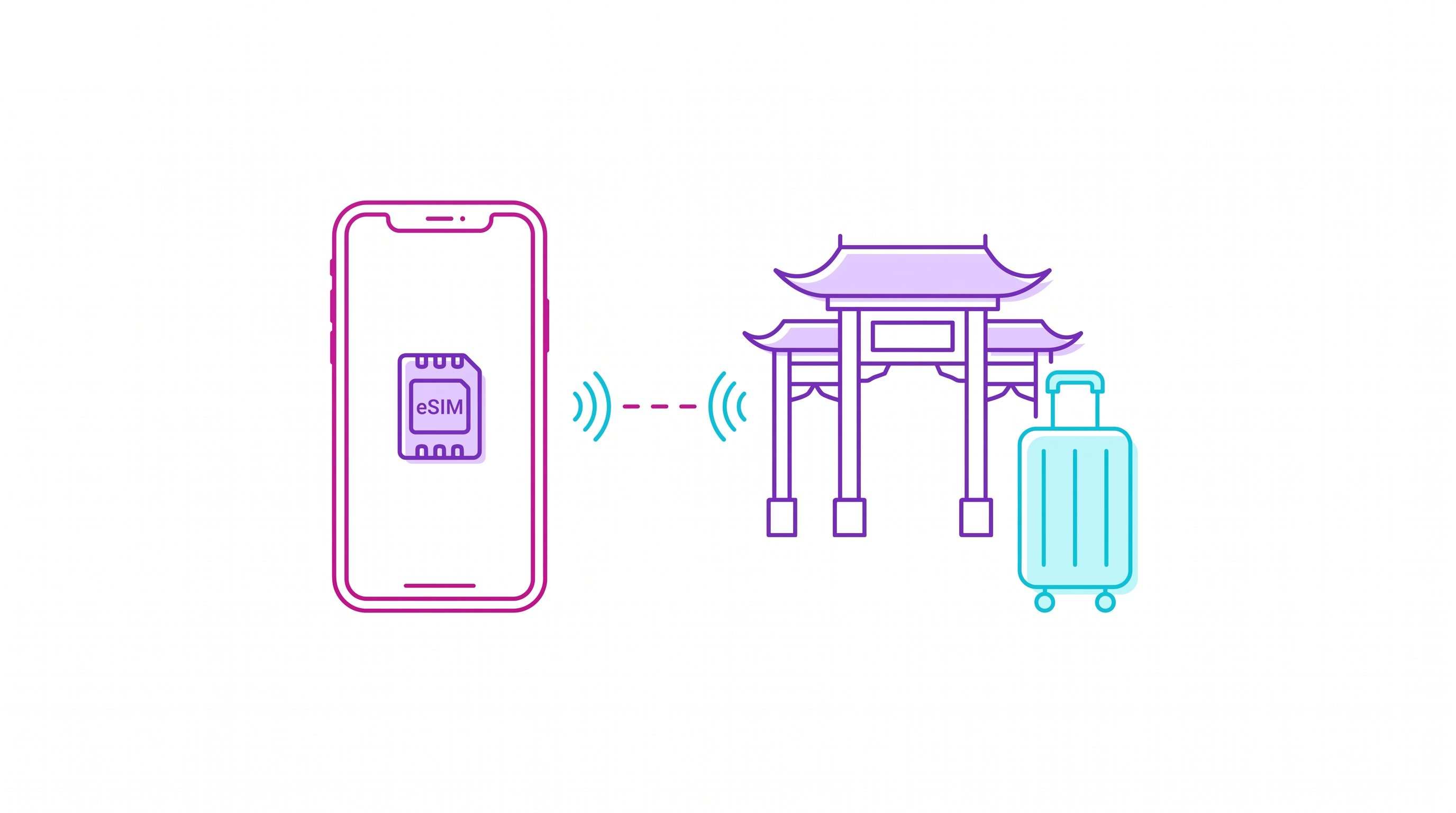
China has spent years as the biggest hole in the global eSIM map. In 2026 that changed: all three state-owned carriers have switched consumer eSIM on for smartphones, ending a restriction that made the world's largest smartphone market a physical-SIM island.
The rollout is real and it is fast. China Unicom moved first, starting in late 2025, and now supports eSIM in more than 25 provinces. China Telecom followed with coverage across all 31 provinces. China Mobile reported more than 150,000 sign-ups within hours of opening its service. Analysts expect the Chinese market to account for roughly 30 million eSIM smartphone shipments this year alone - enough on its own to move global adoption curves. The GSMA still projects that eSIM will overtake physical SIM worldwide by 2030, and China switching sides is a large part of why that forecast holds.
Why this took so long
Chinese carriers had been running eSIM on wearables, tablets and IoT modules for years while keeping it off phones. The reason was never technical. eSIM makes it trivially easy to change operator from a settings menu, and it complicates the real-name registration rules that govern every mobile line in the country. Regulators wanted identity verification nailed down before a profile could be downloaded over the air rather than handed over a counter.
The unlock came from solving that, not from relaxing it - which is exactly why the news is more complicated for travelers than the headlines suggest.
The catch for visitors
Activating a local Chinese eSIM still requires an in-person visit to a carrier store with a mainland Chinese ID card. There is no remote sign-up, no passport path, no airport kiosk QR code. If you are flying into Shanghai or Beijing next month, the eSIM era has not arrived for you.
For visitors, the practical options are unchanged:
- Tourist physical SIM cards sold at airports and large hotels by China Mobile, China Unicom and China Telecom. Cheap, fast, and tied to local network priority - but they route through the domestic internet, so the usual site and app restrictions apply.
- International roaming from your home carrier. Expensive, but it typically routes traffic back through your home network.
- A travel eSIM bought before departure. These are provisioned outside mainland China and generally break out internationally, which is why they remain the default recommendation for short trips.
That third option is why China's domestic rollout does not eliminate the travel eSIM category in the way some coverage implied. Two different products are being confused: a local line for residents, and a roaming data profile for visitors. See our breakdown of where travel eSIMs are blocked or restricted in 2026 for how those rules differ by country.
What it changes for the rest of us
The second-order effects matter more than the tourist story.
First, device design. Phone makers have been keeping SIM trays alive largely for markets where eSIM was not an option, and China was the biggest of those. With that objection gone, the pressure to keep a tray in flagship hardware drops sharply - which lines up with the broader move toward eSIM-only phones we have tracked all year in eSIM-only phones and what they mean for travelers.
Second, wholesale supply. Travel eSIM providers buy local data at wholesale and resell it in an app. More Chinese carrier capacity being provisioned digitally, at scale, tends over time to widen supply and pressure prices for China data packs - historically some of the most expensive in Asia.
Third, standards momentum. China aligning with global eSIM specifications reduces the fragmentation that has forced providers to maintain separate technical paths for the market.
What to do before your next trip to China
If you are traveling in the next few months, plan as if nothing has changed on the ground:
- Buy connectivity before you fly. Install a travel eSIM at home while you still have working data - installation needs internet, and airport Wi-Fi in China often requires an SMS code sent to a local number.
- Check your device is eSIM-capable and carrier-unlocked. An eSIM-only iPhone bought in the US works fine; a carrier-locked handset may not accept a second profile.
- Keep a fallback. Two profiles - your home line for SMS codes plus a data eSIM - covers most failure modes.
- Read the routing details. If accessing services blocked inside mainland China matters to you, check whether your provider breaks out traffic locally or internationally before buying.
Providers such as HOLASIM sell region and country packs you can install before departure, which sidesteps the in-person ID requirement entirely because you are never buying a Chinese domestic line in the first place.
China joining the eSIM era is genuinely a milestone. Just not, yet, one you can use from arrivals.