Carriers Are About to Flood the Market With Their Own Travel eSIMs — Here Is Why It Probably Will Not Work
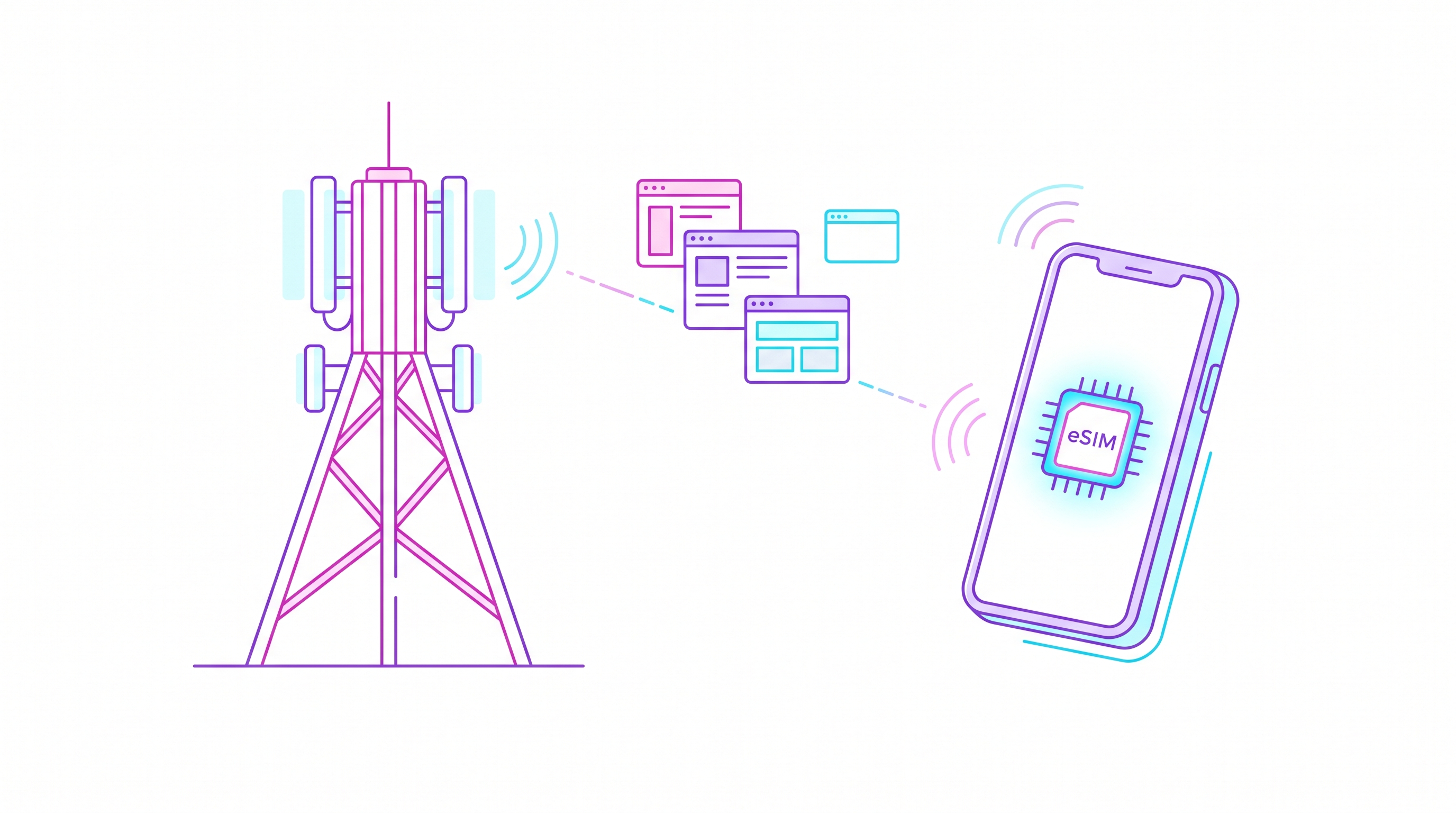
Mobile operators are preparing a wave of their own prepaid and postpaid travel eSIM plans, in a direct attempt to stop third-party apps from taking a bigger slice of the international connectivity market. After years of watching travel eSIM startups eat into roaming, carriers have concluded that the safest place to lose a customer is to themselves.
The scale of the threat explains the urgency. Travel eSIM package revenue is heading for roughly $1.8 billion — an 85% jump year over year — and travel eSIM users have crossed 134 million globally. GSMA Intelligence reports that 73% of mobile network operators have now launched commercial eSIM for smartphones, though many still do very little to promote or activate it.
What is actually driving this
Two things changed at once.
Connectivity-as-a-Service lowered the barrier. Platforms that resell wholesale network access have made it possible to launch a travel eSIM brand without owning spectrum, towers, or roaming agreements. That is why the category went from a handful of players to dozens in three years, and why price competition has been brutal.
eSIM-only phones removed the friction that protected carriers. When a traveler had to hunt for a paperclip and a physical SIM, the default was to keep roaming on. On an eSIM-only handset, adding a second profile is a two-minute in-app purchase at the gate. The switching cost that quietly defended roaming revenue has effectively disappeared.
Carriers are responding on two fronts. Some are launching branded travel eSIMs to capture the customer they were going to lose anyway. Others are simply making roaming cheaper. In South Korea — the first market where locally bought eSIMs overtook carrier roaming, 36% to 34% — KT raised data allowances on its shared roaming plans effective September 1: the 33,000-won tier went from 4 GB to 5 GB, the 44,000-won tier from 8 GB to 10 GB, and the 66,000-won tier from 12 GB to 20 GB.
Why the defensive move is hard to pull off
A carrier launching a travel eSIM has a structural problem: it is competing against its own roaming margin. Price the eSIM aggressively enough to beat Airalo or HOLASIM, and you cannibalize a higher-margin product you already sell to the same person. Price it to protect the margin, and it loses on the only axis travelers actually compare.
That tension shows up in the numbers. US carrier international day passes still sit at $10 to $12 per day — $140 to $168 for a two-week trip. Travel eSIM apps cover the same two weeks for well under $30 in most regions, with entry bundles under $5 for 1 GB. Independent estimates put the savings from switching at 70% to 90%.
No carrier-branded travel eSIM has yet launched at a price that closes that gap, because closing it would mean admitting the roaming price was never about cost.
What this means for you on your next trip
The good news is that competition is doing its job. More sellers means more downward pressure, and the carrier plans arriving in 2026 are meaningfully better than the roaming products they replace — the Korean allowance increases are a real, if modest, win for travelers who never planned to switch.
The practical guidance has not changed:
- Compare on price per GB and validity, always. A carrier travel eSIM at $25 for 3 GB over 7 days is not competitive with a $19 plan for 10 GB over 30 days, no matter whose logo is on it. Our per-GB comparison is the fastest way to sanity-check any new offer.
- Do not confuse a carrier travel eSIM with a day pass. They are different products with very different economics, and carriers sell both.
- Check the network your eSIM actually rides on. A travel eSIM from a specialist provider frequently uses the same local networks the roaming plan does — you are paying for the same radio at a different markup.
- Keep your home number active on the second profile. Dual-eSIM handsets let you keep SMS and calls on your home line while data runs on the travel plan. That single setting removes most of the reason people stay on roaming.
Specialist providers such as HOLASIM, Airalo, Saily and Nomad still win on price per GB in most regions because data is their only product. Carriers are entering a race where their opponents have nothing to protect.
The read-through
Watch for a familiar pattern over the next year: carriers will bundle travel data into existing postpaid tiers rather than compete head-on on price. Bundling is the only defensive move that does not require admitting the price gap out loud, and it works — bundled data is sticky even when it is not cheap, the same dynamic now playing out across airlines, credit cards and banking apps.
For the traveler, the takeaway is unglamorous but reliable: the logo does not determine the value, the per-GB price and the validity window do. Check both before you install anything, whoever is selling.