Calling Apps Are Now Selling Travel eSIMs: BOSS Revolution Adds Data in 190+ Countries
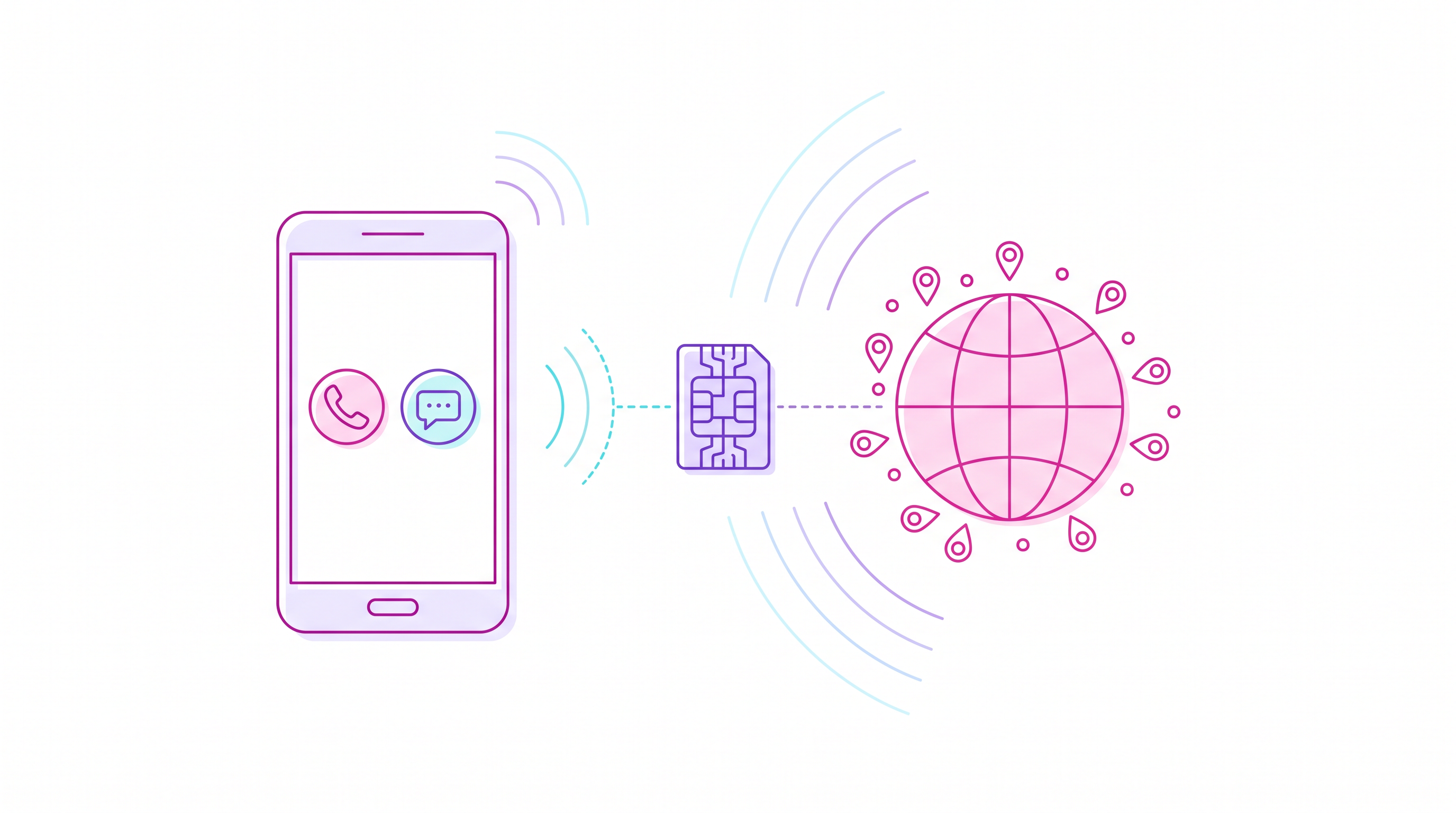
IDT Corporation announced on September 3, 2026 that travel eSIM data plans are now available directly inside the BOSS Revolution app, covering more than 190 countries. The app is not a telecom brand in the way Airalo or Holafly are — it is one of the largest international calling and money-transfer apps in the United States, used heavily by immigrant and diaspora communities to call home.
That detail is the story. A calling app adding eSIM plans is the clearest sign yet that travel data has stopped being a telecom product and become a feature that any app with a travel-shaped audience can bolt on.
What was announced
BOSS Revolution users can now buy and activate a data plan for 190+ countries without leaving the app they already use to send money and place international calls. The activation flow is the standard one: pick a destination, pick a data bundle, install the profile, land connected. No store visit, no physical SIM, no carrier contract.
For IDT, the logic is straightforward. It already owns the relationship with a customer who by definition travels internationally or has family abroad. Selling that customer a data plan for the trip is a smaller leap than acquiring a new eSIM buyer from scratch — which is exactly why customer-acquisition cost is the real battleground in this category right now.
Why it matters if you are the traveler
The eSIM market in 2026 has three distinct kinds of seller, and they price very differently.
Pure-play eSIM apps — Airalo, Holafly, Saily, Nomad, HOLASIM and dozens of others. They compete on price per GB, coverage, and app experience. Entry bundles now sit under $5 for 1 GB in most regions.
Carriers selling their own travel eSIMs — increasingly common as operators try to defend roaming revenue rather than lose it entirely.
Non-telecom apps bundling data — airlines, credit cards, fintechs, and now calling apps. This is the fastest-growing category and the one where prices are least transparent, because data is rarely the product being optimized. It is an add-on designed to increase retention in the core app.
The practical consequence: convenience-bundled data is usually not the cheapest data. When an eSIM is sold inside an app you opened for another reason, the plan is competing against your inertia, not against the market. That is fine when the gap is a couple of dollars. It is not fine when it is 3x.
The numbers to keep in your head
Travel eSIM users reached roughly 134 million globally in 2026, up about 32% year over year. Travel eSIM package revenue is on track for around $1.8 billion, an 85% jump from the prior year. GSMA Intelligence puts commercial smartphone eSIM launches at 73% of mobile operators.
Meanwhile, US carrier international day passes still run $10 to $12 per day. A two-week trip on a day pass is $140 to $168. The same two weeks on a mid-tier travel eSIM is frequently under $30. Switching from carrier roaming to an eSIM app typically saves 70% to 90% on international data — and that gap is what every one of these new distribution deals is quietly built on.
What to actually do before your next trip
- Check the per-GB price, not the headline price. A $4.99 bundle for 1 GB and a $19 bundle for 10 GB are not remotely the same deal. Our cheapest price per GB comparison tracks this across providers.
- Check the validity window. Bundled plans from non-telecom apps often carry shorter validity than standalone eSIMs, which quietly raises the effective cost of a slow trip.
- Check whether hotspot sharing is allowed. If you travel with a partner or family, one shared plan can beat two separate ones.
- Check what happens when you run out. Top-up pricing inside a bundled app is frequently worse than the initial bundle.
Providers focused only on travel connectivity — HOLASIM among them — tend to publish clearer per-GB pricing and top-up terms simply because that is the product they are judged on. When data is the main event rather than a retention feature, the terms are easier to read.
The bigger pattern
We have now covered banks doing this (Revolut Mobile Plans), airlines and hotels doing it, and now a calling app. The common thread is that eSIM provisioning has become cheap enough infrastructure that distribution — not network access — is the scarce resource.
For travelers, that means more places to buy data and more variance in what that data costs. The winning move is not loyalty to one app. It is spending ninety seconds comparing per-GB price and validity before you install anything.