Telus Takes Its $15 SIM and eSIM Fee to Federal Court in 2026 - And Travelers Should Watch
Telus has escalated its fight with Canada's CRTC over a $15 fee to issue a SIM or activate an eSIM. The case puts activation fees - the line item travelers never price in - under a regulator's microscope.
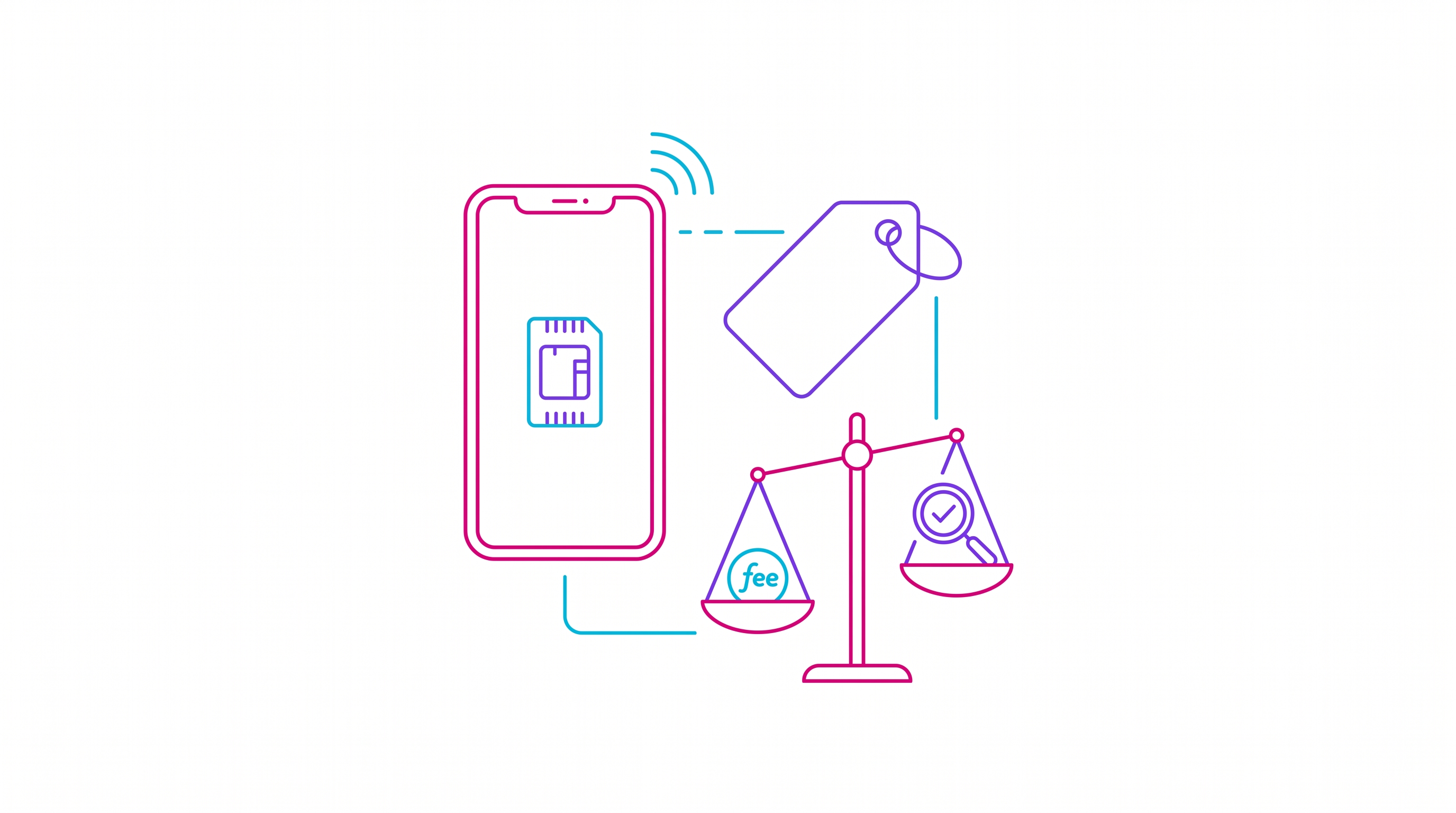
Canada's telecom regulator and one of the country's largest carriers are heading to court over something most people never think about until it shows up on a bill: the fee you pay simply to get a SIM - or an eSIM - switched on.
What happened
Telus has escalated its dispute with the Canadian Radio-television and Telecommunications Commission (CRTC) to the Federal Court of Appeal, in a filing dated September 14, 2026. At the centre of it is the carrier's $15 charge for issuing a SIM card or activating an eSIM, and whether that charge is compatible with the consumer-protection rules the CRTC has been applying through 2026.
The regulator has been examining whether the fee breaches those rules. Telus's move to the Federal Court of Appeal concerns how the proceeding itself is being handled, which tells you something on its own: the carrier intends to fight for the fee rather than quietly withdraw it.
That is a notable position in 2026, because an eSIM is not a physical object. There is no plastic card to manufacture, no retail packaging, no courier. Activating an eSIM is a profile download. A flat issuance fee that applies equally to a piece of plastic and to a file transfer is precisely the kind of charge a consumer-protection framework is designed to interrogate.
Why a SIM fee matters well beyond Canada
Activation and issuance fees are the part of a mobile bill travelers almost never price in. You compare the headline plan - the gigabytes, the daily rate, the coverage map - and then a one-time charge appears for the privilege of turning the line on.
Canada has been an unusually active market on this front. The CRTC already requires carriers to cut off roaming charges at a $50 threshold in 2026 and has been scrutinising the practices of the country's three largest operators. We covered that framework in Canada's new roaming rules and the $50 cutoff.
Regulators tend to borrow from one another. A ruling that treats an eSIM activation charge as a consumer-protection question rather than a routine administrative fee would not stay inside Canadian borders for long.
The numbers travelers actually feel
Zoom out from the $15 and the pattern is familiar. In 2026, US carriers typically charge $10 to $12 per day for international day-pass roaming, and those "unlimited" passes are frequently throttled after roughly 500 MB. Without a pass, pay-per-use data on some legacy plans still runs into the $10 to $20 per megabyte range. Industry estimates put roughly $1.7 billion in surprise roaming charges billed to American travelers in a single year.
We broke the day-pass math down trip by trip in AT&T vs Verizon vs T-Mobile day passes in 2026. The short version: on a two-week trip, the pass alone can cost more than the flight's checked bag.
Post-Brexit, UK carriers are no longer bound by EU roaming rules and most have reintroduced EU roaming add-ons in the £2 to £5 per day range. The direction of travel is consistent: the sticker price is rarely the price.
What this means before your next trip
Three practical takeaways from the Canadian case.
Read past the plan price. Activation, issuance and connection fees are separate line items and they are not always disclosed at the point of comparison. When you price a local prepaid SIM abroad, ask what it costs to activate, not just what the data costs.
A travel eSIM sidesteps the counter entirely. There is no storefront, no ID queue, no plastic to issue, and reputable travel eSIM providers - HOLASIM among them - sell a plan at a single price rather than a plan plus a fee to switch it on. What you pay at checkout is what the trip costs in data.
Install before you fly. Whatever you choose, arrange it while you still have Wi-Fi you trust. Landing in a country and hunting for a SIM counter is how travelers end up paying day-pass rates for the first 48 hours by default.
The Telus case will take months to resolve, and a court may yet decide the fee is perfectly lawful. But the argument itself is the useful signal: in 2026, what carriers charge you to simply start a line is no longer treated as a rounding error.