2G and 3G Are Being Switched Off Worldwide in 2026: 313 Operators, 89 Countries, and What Travelers Lose
A new GSA report counts 313 operators in 89 countries retiring 2G and 3G. Europe accounts for 43% of all shutdowns - and the safety net older phones relied on abroad is disappearing.
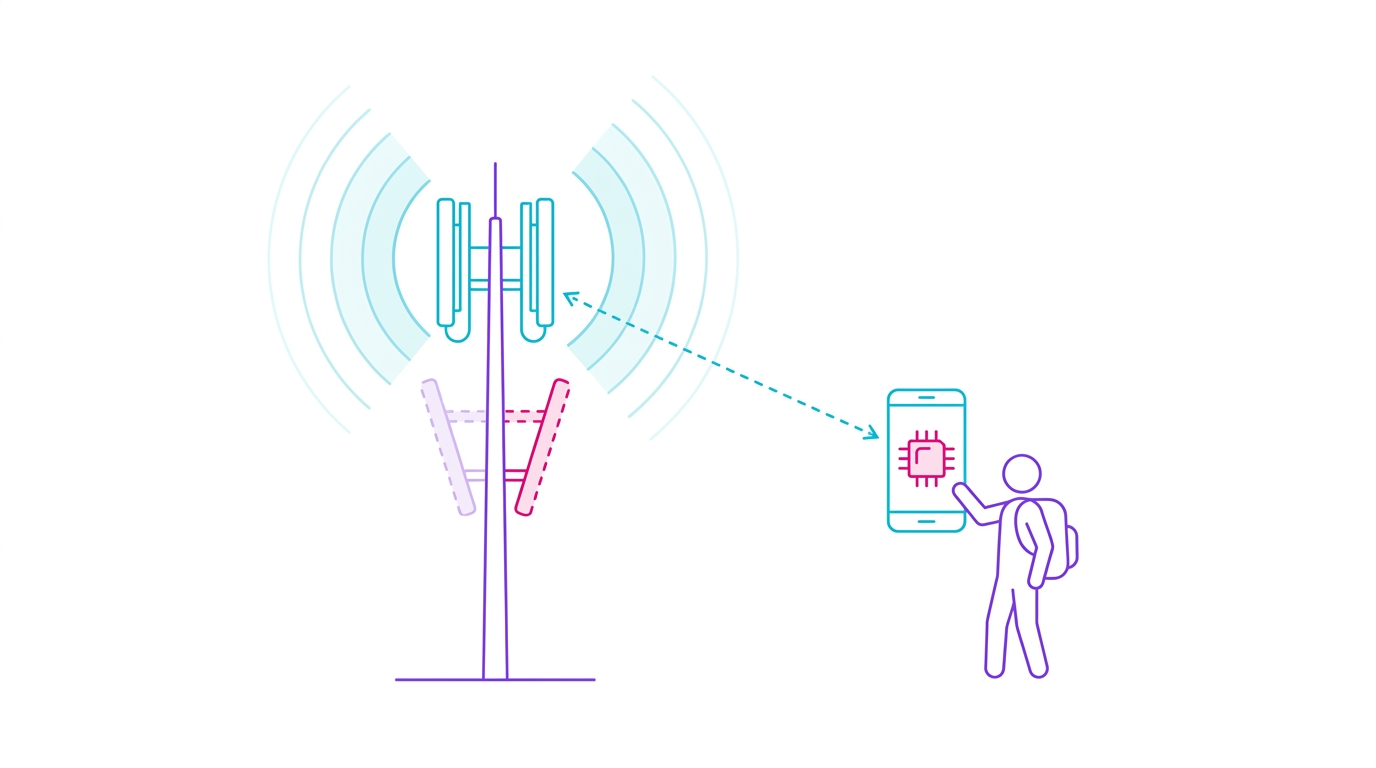
The old fallback layer of the mobile internet is being dismantled, and 2026 is the year it accelerates. A new report from the GSA (Global mobile Suppliers Association), covered this week, identifies 313 operators across 89 countries and territories that have completed, planned or are currently running 2G and 3G switch-offs.
The motivation is spectrum. Retiring legacy networks lets operators refarm those frequencies to add LTE and 5G capacity, and cuts the energy cost of running networks that carry almost no traffic. Some shutdowns are driven by operator group targets; others are mandated by governments and regulators specifically to free spectrum for newer technology.
The numbers behind the shutdown wave
The GSA data breaks down like this:
- 139 operators in 70 markets have completed or planned 2G shutdowns, with 56 already finalised.
- 174 operators in 67 markets have started 3G switch-offs, of which 102 have finished.
- 27 operators have now retired both their 2G and 3G networks.
- 58% of operators retiring older networks are upgrading to both 4G and 5G.
Geographically, Europe leads the world in switch-off activity with 43% of all cases, followed by Asia at 26% and Latin America and the Caribbean at 9%.
"When they were first introduced to the market, 2G and 3G were highly important innovations, but as greater technological advances have emerged, their importance has waned, and usage of both technologies is now diminishing worldwide," said Joe Barrett, President of the GSA. He added that governments, regulators and operator groups are increasingly setting specific switch-off dates, which will push more shutdowns through 2026 and beyond.
The report also notes that some operators have missed their original targets, particularly where machine-to-machine and IoT devices with long replacement cycles are still attached to legacy networks.
Why this matters when you cross a border
Domestically, most people never notice a 3G shutdown - their phone was already on 4G or 5G. Travel is where the gap shows up, for three reasons.
1. Roaming fallback is going away. Historically, when a visitor's phone could not negotiate a modern connection on a foreign network, it dropped to 2G or 3G and at least got calls and SMS through. That safety net is being removed. In the UK, for example, Virgin Media O2 says its 2G network now carries less than 0.5% of all traffic on its network and is already closed for international roaming, ahead of a full sunset planned for summer 2029.
2. Voice depends on VoLTE. With 3G gone, voice calls need VoLTE (voice over LTE). If your phone or your plan does not have VoLTE enabled on the visited network, you can end up with working mobile data and no ability to make or receive an ordinary call - a common and confusing failure mode abroad.
3. Older and grey-market handsets are the most exposed. Phones bought in another region may lack the LTE bands or the VoLTE certification the local operator requires. The UK is a preview of where much of Europe is heading: EE and Vodafone completed their 3G shutdowns in 2024, Virgin Media O2 began in earnest in July last year, and Three retired its 3G network in November.
What to check before your next trip
- Confirm your phone supports VoLTE and that it is switched on in the mobile network settings, not just at home but for roaming.
- Check the LTE bands your handset supports against the bands used at your destination, especially if the phone was bought in a different region.
- Do not rely on 2G or 3G as a backup plan anywhere in Western Europe, and increasingly not in much of Asia either.
- Use a data-first connectivity plan and app-based calling. A travel eSIM from a provider such as HOLASIM, Airalo, Holafly or Saily gives you a local 4G/5G data connection on arrival, and WhatsApp, FaceTime or Signal handle the voice side without depending on legacy voice networks at all.
- Install and test the eSIM before you fly. Activation while connected to home Wi-Fi avoids the worst case: landing in a country where your phone cannot register on any network it understands.
The practical takeaway is that legacy networks are no longer a cushion. A phone that only works because it can drop to 3G is a phone that will stop working abroad, and the timeline for that is now measured in months rather than years in Europe.
For a wider view of how satellite connectivity is filling the coverage gaps left behind, see our report on satellite 5G and NTN in 2026. And if you want to know which eSIM capabilities actually matter on a modern network, start with the eSIM features that matter in 2026.